
When “Mother” Becomes a Shield Against Accountability
“There is no worse heresy than that the office sanctifies the holder of it.”
— Lord Acton, April 5, 1887
A Truth More Than a Century Old
In 1887, British historian Lord Acton wrote a letter to Bishop Mandell Creighton challenging the idea that powerful individuals should be judged differently simply because of the positions they occupied.
Acton was discussing political and religious authority—particularly the tendency to excuse the wrongdoing of kings, popes, and other influential figures because of their titles.
His argument was straightforward: Authority does not exempt anyone from moral accountability.
Most people are familiar with another statement from that same letter:
“Power tends to corrupt, and absolute power corrupts absolutely.”
But it’s the lesser-known observation that stopped me in my tracks:
“There is no worse heresy than that the office sanctifies the holder of it.”
In other words, holding a position of authority doesn’t automatically make someone honorable, trustworthy, righteous, or deserving of unquestioned loyalty.
The title does not create the character.
The position does not erase the behavior.
And the authority does not excuse the harm.
Acton was writing about political and religious institutions. But as an adult child who spent nearly five decades navigating a dysfunctional family system, I couldn’t help seeing the parallels.
Because there’s another institution where this same dangerous assumption is deeply embedded.
The family.
And there’s one title in particular that society often treats as practically untouchable.
Mother.
The Sacred Title of “Mother”
Think about how we talk about motherhood.
A mother’s love is unconditional.
A mother always knows best.
Nobody will ever love you like your mother.
You only get one mother.
And, of course, that familiar declaration whenever someone dares to establish boundaries:
“But she’s your MOTHER!”
As though those four words should settle every disagreement, erase every betrayal, and absolve every harmful act that preceded them.
Don’t misunderstand me. Motherhood can be an extraordinary expression of love, sacrifice, protection, and devotion. There are countless mothers who deserve tremendous respect for the love and care they provide.
But that’s precisely the point.
They deserve that respect because of what they do, not merely because of what they’re called.
Somewhere along the way, our culture developed a troubling tendency to confuse the title of parent with proof of parental virtue.
We began treating the relationship itself as evidence of goodness.
And for children raised by emotionally immature, manipulative, neglectful, or narcissistic parents, that assumption can become a prison.
Because what happens when the person society insists you should trust is the very person who repeatedly violates your trust?
What happens when the person you’re told will always protect you is the person you need protection from?
What happens when the title says mother, but the behavior tells an entirely different story?
For many of us, the answer is that we spend years—sometimes decades—trying to reconcile two incompatible realities.
The parent we’re told we have.
And the parent we’ve actually experienced.
When Authority Becomes Immunity
Healthy parental authority comes with responsibility.
Parents make decisions for children because children are still developing the ability to navigate the world independently. Ideally, that authority is exercised with patience, empathy, protection, and an understanding that the child is a separate human being.
It’s supposed to be a responsibility, not a lifelong entitlement.
But in dysfunctional family systems, authority can become something very different.
It can become a shield against criticism.
A tool for demanding obedience.
A justification for controlling behavior.
And perhaps most damaging of all, an excuse for avoiding accountability.
A child who questions a parent’s dishonesty becomes “disrespectful.”
A teenager who challenges unfair treatment becomes “ungrateful.”
An adult who establishes boundaries becomes “selfish.”
And someone who finally speaks openly about the family dysfunction becomes the person accused of destroying the family.
Notice what’s happening here.
The focus shifts away from the behavior of the person holding the authority and onto the supposed wrongdoing of the person questioning it.
The parent doesn’t have to answer for what happened.
The child has to answer for daring to bring it up.
That’s the family version of the very principle Acton was warning against.
The office sanctifies the holder.
The title becomes more important than the conduct.
And preserving the authority figure’s reputation becomes more important than acknowledging the harm experienced by those under that authority.
My Own Fifty-Year Lesson
I didn’t grow up knowing what covert narcissism was.
I didn’t have the language to describe emotional neglect, manipulation, gaslighting, or the subtle ways a dysfunctional family system can distort a child’s understanding of reality.
I just knew that something felt wrong.
Growing up as a Gen-X kid in Texas, I often felt like an outsider in my own family.
There was a persistent sense that something didn’t quite fit, but I couldn’t explain it. When you’re a child, your family environment is your baseline for understanding the world.
You don’t have another childhood to compare it against.
You simply adapt.
You learn which subjects are safe.
Which questions cause trouble.
Which emotions are better kept to yourself.
And which versions of reality you’re expected to accept.
As I grew older, I carried those adaptations into adulthood.
I learned to minimize things.
To make excuses.
To second-guess my own interpretations.
To keep trying, even when the effort was painfully one-sided.
After all, she was my mother.
And somewhere deep in my conditioning lived the assumption that being my mother meant she deserved a degree of loyalty, forgiveness, and access that I wouldn’t have extended to anyone else behaving the same way.
I didn’t recognize it then, but I was giving the title more weight than the behavior.
I was holding the relationship sacred while repeatedly sacrificing my own well-being to preserve it.
The DNA Revelation: When the Story Stopped Adding Up
On October 27, 2021, my life changed.
DNA results revealed something that fundamentally altered my understanding of my own history.
The man I’d grown up believing was my biological father wasn’t my biological father at all.
For decades, I’d lived inside a story about my identity that turned out to be untrue.
Imagine approaching fifty years old and discovering that a foundational piece of your own origin story had been concealed from you.
This wasn’t some minor forgotten detail from childhood.
This was my identity.
My ancestry.
My understanding of where I came from.
And suddenly, so many things that had never quite made sense began looking very different.
But as devastating as the revelation itself was, the response to it would prove even more revealing.
On Christmas Eve 2021, I confronted my mother.
I wanted answers.
I wanted honesty.
I wanted the opportunity to reconcile the history I’d been told with the evidence now staring me in the face.
Instead, I encountered denial.
And that’s where Lord Acton’s observation becomes especially relevant to my experience.
Because I wasn’t asking my mother to be perfect.
I wasn’t demanding that she go back in time and change whatever choices had been made decades earlier.
I was asking for something much simpler.
The truth.
And eventually, accountability for the impact those choices had on my life.
The uncomfortable question became impossible to ignore:
If this were anyone other than my mother, would I continue accepting this?
Would I tolerate someone repeatedly denying something supported by clear evidence?
Would I keep giving someone unlimited opportunities to rewrite my own history?
Would I continue treating their position in my life as a reason to disregard my own experience?
The honest answer was no.
But because she was my mother, I kept trying.
That was the power of the title.
The Mom-pocalypse: When the Illusion Collapsed
By May 12, 2024, the accumulated weight of everything finally reached a breaking point.
I’ve come to call what followed the Mom-pocalypse.
And I don’t use that term lightly.
It was the collapse of an entire understanding of my family, my identity, and the relationships I’d spent most of my life trying to preserve.
For years, I’d interpreted painful experiences through a framework that gave my mother the benefit of the doubt.
Maybe she didn’t mean it that way.
Maybe I misunderstood.
Maybe there’s an explanation.
Maybe this time will be different.
Maybe if I can just find the right words, she’ll finally understand.
The list of maybes was practically endless.
But eventually, I had to confront something I’d spent decades avoiding.
An explanation is not the same thing as accountability. And a family title is not evidence that someone is acting in your best interests.
Once I began evaluating the patterns of behavior rather than the relationship’s title, the picture changed dramatically.
The dishonesty.
The emotional manipulation.
The absence of meaningful accountability.
The repeated efforts to preserve a version of events that didn’t align with what I’d actually experienced.
And the expectation that I would somehow continue absorbing the consequences.
Even after the truth began emerging, the broader family fallout brought more chaos, disruption, and financial strain. Other relatives ended up shouldering burdens created by decisions they hadn’t made.
The pattern was bigger than any single incident.
And the question was no longer whether I could find one more explanation that would make it all acceptable.
The question was whether I was willing to keep participating in it.
The Trap of Endless Forgiveness
One of the most damaging ideas imposed on adult children of dysfunctional families is that forgiveness requires reconciliation.
We’re told to be the bigger person.
To let bygones be bygones.
To stop holding grudges.
To remember everything our parents supposedly sacrificed for us.
And sometimes, those messages are delivered by people who know very little about what actually happened behind closed doors.
I’m not opposed to forgiveness.
I’m opposed to the idea that forgiveness should function as a lifetime exemption from accountability.
There is a profound difference between releasing yourself from the emotional burden of the past and voluntarily exposing yourself to the same harmful patterns in the present.
You can stop seeking revenge without restoring access.
You can wish someone well without trusting them.
You can acknowledge that a parent has their own wounds, limitations, and history without excusing the harm they caused.
And you can understand why someone behaves as they do without accepting that behavior in your life.
Compassion does not require unlimited access.
Neither does biology.
In fact, I’d argue that the greater the power someone holds over another person, the greater their responsibility to exercise that power carefully.
A parent possesses enormous influence over a child’s emotional development, sense of safety, identity, and understanding of relationships.
That isn’t a reason to lower the standard of accountability.
It’s a reason to take that standard seriously.
A parent shouldn’t receive less scrutiny simply because they’re a parent.
The relationship carries profound responsibilities precisely because it carries profound influence.
When the Family Protects the Title Instead of the Child
There’s another layer to this dynamic that deserves attention.
The family system itself.
In some dysfunctional families, preserving the image of the parent becomes a collective project.
People may minimize behavior they’ve witnessed.
They may pressure the adult child to reconcile.
They may insist that confronting the truth is causing unnecessary conflict.
They may even accuse the person establishing boundaries of being cruel.
And sometimes they’re not consciously trying to cause harm.
Sometimes they’re uncomfortable.
Sometimes they’re afraid of conflict.
Sometimes acknowledging the truth would force them to confront their own experiences or reconsider longstanding family beliefs.
But regardless of the motivation, the effect can be deeply damaging.
The person describing the problem becomes the problem.
The person refusing to participate in the dysfunction becomes the disruptive one.
And the person whose behavior caused the original harm remains protected by their position in the family.
I’ve come to see this as one of the most insidious elements of dysfunctional family dynamics.
The expectation that the injured person must preserve everyone else’s comfort at the expense of their own reality.
It’s an extraordinary reversal of responsibility.
Imagine applying that standard anywhere else.
Would we tell an employee to accept mistreatment because the person responsible holds the title of manager?
Would we tell someone to tolerate dishonesty because the person lying holds an important public office?
Would we automatically excuse a leader’s conduct because leadership is worthy of respect?
Of course not.
At least, we shouldn’t.
Yet within families, people routinely make precisely that argument.
She’s your mother.
As if that settles the matter.
But it doesn’t.
It never did.
August 29, 2024: Choosing Reality Over the Title
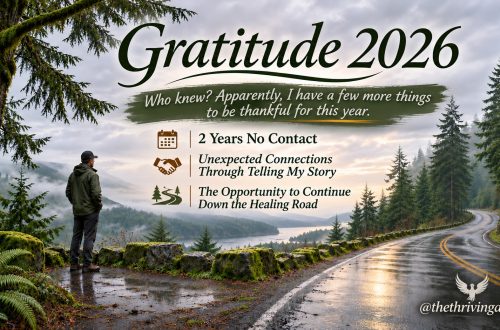
On August 29, 2024, I made the decision to go permanently no-contact with my mother.
It wasn’t an impulsive reaction to one disagreement.
It wasn’t an attempt to punish her.
And it certainly wasn’t the outcome I’d spent my life hoping for.
It came after decades of confusing experiences, years of accumulating evidence, repeated opportunities for honesty, and the painful recognition that I couldn’t build a healthy relationship by myself.
For most of my life, I’d operated under the belief that maintaining the relationship was my responsibility.
That if things weren’t working, I needed to try harder.
Be more patient.
Find a better explanation.
Offer another chance.
But a relationship requires participation from both people.
And accountability cannot be accomplished by proxy.
I couldn’t acknowledge the truth on her behalf.
I couldn’t take responsibility for choices I hadn’t made.
And I couldn’t manufacture the honesty that meaningful reconciliation would require.
Eventually, I had to accept that maintaining the title of mother-and-son relationship was costing me something I could no longer afford.
My peace.
My emotional stability.
My ability to move forward.
And perhaps most importantly, my willingness to trust my own perception of reality.
Going no-contact wasn’t the moment I stopped respecting the idea of motherhood.
It was the moment I stopped allowing that idea to override the reality of my own experience.
That’s an important distinction.
Because boundaries aren’t necessarily a rejection of the relationship’s significance.
Sometimes they’re an acknowledgment of just how significant the harm has become.
The Next Generation Deserves Something Different
There’s another reason this subject matters so deeply to me.
On June 15, 2024, my granddaughter, my first grandchild, was born.
And somewhere in the middle of that extraordinarily difficult year, her arrival gave me another perspective on everything I was experiencing.
For so long, I’d been looking backward.
Trying to understand my childhood.
Reconstructing decades of family history.
Searching for explanations.
Grieving the relationship I’d wanted but hadn’t experienced.
But here was a brand-new life.
A little girl who hadn’t inherited any obligation to participate in the dysfunction I’d spent decades navigating.
And suddenly, the question wasn’t only what had happened to me.
It was what I wanted the next generation to experience.
I want my granddaughter to understand that love and respect are expressed through actions.
That authority should be exercised responsibly.
That her feelings and perceptions matter.
That she can ask questions without being made to feel disloyal.
That she can establish boundaries without believing she’s a bad person.
And that no one—not even someone with a cherished family title—should be granted unlimited permission to mistreat her.
Of course, children need guidance, structure, and healthy authority.
But those things should exist to help them grow into confident, independent human beings.
Not to train them to surrender their judgment to whoever happens to hold the most power.
Breaking the cycle means refusing to pass down the belief that love requires self-abandonment.
It means teaching the next generation that relationships are strengthened by accountability, not threatened by it.
And sometimes, it means making painful choices today so that someone else doesn’t have to spend fifty years unlearning the same lessons tomorrow.
A Title Can Describe a Relationship. It Cannot Define Its Quality.
I think this is where Lord Acton’s words carry their greatest weight.
He wasn’t arguing that positions of authority have no value.
He was challenging the idea that authority itself makes someone morally superior or immune to criticism.
The distinction matters.
A judge isn’t automatically just because they’re a judge.
A religious leader isn’t automatically virtuous because of their position.
A politician isn’t automatically honorable because they’ve been elected.
And a parent isn’t automatically loving, safe, or emotionally healthy because they’ve brought a child into the world.
Those qualities have to be demonstrated.
Through honesty.
Through consistency.
Through empathy.
Through responsibility.
Through the willingness to acknowledge mistakes and repair the harm they cause.
I don’t believe parents have to be perfect.
I’m a father myself. I know I’ve made mistakes, and I know there are things I wish I’d handled differently.
But that’s part of the responsibility.
Our mistakes don’t disappear because we’re parents.
And our children don’t lose the right to describe their experiences simply because we hold that title.
If anything, being a parent should make us more willing to examine our behavior—not less.
Because the goal shouldn’t be to preserve an image of parental perfection.
The goal should be to build relationships where honesty, safety, and mutual respect are possible.
The Grief Beneath the Clarity
There’s something else I want to acknowledge, particularly for adult children who are just beginning to recognize these patterns.
Understanding this intellectually doesn’t make it emotionally easy.
You can know that someone has repeatedly harmed you and still love them.
You can recognize manipulation and still miss the relationship.
You can establish a necessary boundary and still grieve what that boundary represents.
You can be certain about your decision and still experience moments of sadness, anger, guilt, or longing.
Those experiences aren’t contradictions.
They’re part of being human.
For me, the grief wasn’t simply about losing contact with my mother.
It was about confronting the possibility that the version of the relationship I’d spent decades trying to build might never have been available in the first place.
It was grief for the childhood I couldn’t redo.
For the truths I’d been denied.
For the time I’d spent doubting myself.
For the countless opportunities I’d offered in the hope that something would finally change.
And perhaps most painfully, for the mother I’d needed rather than the one I’d experienced.
That’s not the kind of grief that disappears because you finally understand what happened.
Clarity doesn’t eliminate grief.
Sometimes it makes room for grief that you’ve spent a lifetime suppressing.
But clarity also makes something else possible.
Freedom.
Not necessarily freedom from every painful memory or emotional trigger.
But freedom from the obligation to keep defending a story that contradicts your own lived experience.
Freedom to stop making excuses.
Freedom to establish relationships based on reality rather than obligation.
And freedom to recognize that your worth was never dependent on your ability to earn healthy love from someone who couldn’t—or wouldn’t—provide it.
The Lesson I Wish I’d Learned Decades Earlier
When I first encountered Lord Acton’s statement, I recognized something I’d spent most of my life learning the hard way.
We should never confuse the legitimacy of a role with the character of the person occupying it.
Motherhood deserves respect as a responsibility.
Fatherhood deserves respect as a responsibility.
Family relationships can be deeply meaningful and worthy of preservation.
But none of those truths requires pretending that every person holding those titles has fulfilled the responsibilities that come with them.
And none of them requires tolerating ongoing harm.
I spent nearly fifty years trying to reconcile the idea of who my mother was supposed to be with the reality of what I’d experienced.
The DNA revelation forced me to question the story.
The Mom-pocalypse forced me to confront the patterns.
And going no-contact forced me to recognize that I had a choice.
I could continue protecting the title.
Or I could finally protect myself.
Today, I understand that the two were never supposed to be in conflict.
A healthy parent-child relationship shouldn’t require one person to abandon their reality in order to preserve the other’s authority.
It shouldn’t require silence about dishonesty.
It shouldn’t demand endless forgiveness without accountability.
And it shouldn’t make love conditional on unquestioning obedience.
Lord Acton wrote about the moral danger of treating authority as a substitute for virtue.
More than a century later, his warning remains remarkably relevant—not just in halls of government or religious institutions, but around family dinner tables and behind the closed doors of ordinary homes.
Because the principle is universal.
No office sanctifies the holder.
No title erases the harm.
No biological connection cancels accountability.
And no family relationship should require you to surrender your dignity simply to keep someone else comfortable.
A mother is a mother by relationship.
A father is a father by relationship.
But trust, emotional safety, and respect are built through behavior.
And when those things are repeatedly absent, acknowledging that reality is not an act of betrayal.
Sometimes, it’s the first act of honesty in a relationship that has demanded silence for far too long.
The title may define the relationship.
But the behavior reveals its truth.
And sometimes, the most important step toward healing is finally learning the difference.
Historical reference: Lord Acton, letter to Bishop Mandell Creighton, April 5, 1887.