Some of the most powerful things we can give our children are the things we choose NOT to pass down.
Not the family heirlooms.
Not the treasured recipes.
Not the embarrassing childhood photographs we’ll inevitably drag out when they bring someone home for the first time.
I’m talking about the things nobody puts in a will.
The fear.
The shame.
The guilt.
The emotional manipulation.
The unspoken rules about who gets to have feelings, whose feelings matter, and who is expected to swallow theirs to keep everybody else comfortable.
The generational baggage that gets handed down so casually that nobody even thinks to question why they’re carrying it.
And perhaps most importantly, the belief that being family means tolerating things you would never accept from anybody else.
Yeah. That one.
That one deserves its own chapter.
When Dysfunction Is Your Definition of Normal
Here’s something I’ve come to understand about growing up in a dysfunctional family:
You don’t necessarily know you’re growing up in one.
Not when you’re a child.
You don’t have a healthy family sitting next door in your head to compare yours against. You don’t have decades of life experience to draw from. You don’t have the vocabulary to recognize manipulation, emotional neglect, gaslighting, or narcissistic abuse.
You just have your family.
And whatever happens inside that family becomes your definition of normal.
If love is conditional, you learn to earn it.
If expressing hurt gets you punished, you learn to hide it.
If questioning a parent is considered disrespectful, you learn that obedience matters more than truth.
If the family survives by protecting one person’s feelings at everybody else’s expense, you learn to make yourself smaller.
And if the adults responsible for protecting you are the very people causing the harm?
Well, you learn to survive.
You adapt. You accommodate. You anticipate moods. You become exceptionally good at reading rooms and exceptionally bad at recognizing your own needs.
Then one day you grow up, have children of your own, and discover that you’ve been handed an entire instruction manual for parenting.
There’s just one little problem.
Somebody forgot to tell you that the manual was written by people who didn’t know how to love without controlling.
The Most Dangerous Words in Parenting
“That’s how I was raised.”
Five little words.
And depending on what follows them, they can either be a harmless explanation or a generational curse.
“I got screamed at, and I turned out fine.”
“I got hit, and I learned respect.”
“My parents never apologized to me.”
“Children should be seen and not heard.”
“Family comes first, no matter what.”
Sound familiar?
Here’s the thing.
Surviving something doesn’t automatically make it worth repeating.
And just because something was considered normal in a previous generation doesn’t mean it was healthy.
Some traditions deserve to be preserved.
Others deserve to be buried.
Preferably without a memorial service.
We can appreciate what our parents did right without pretending everything they did was right.
We can acknowledge their struggles without excusing the harm they caused.
And we can recognize that they may have inherited their own wounds without accepting those wounds as our children’s inheritance.
Understanding where dysfunction came from is useful.
Continuing it is optional.
My Own Generational Crossroads
For most of my life, I didn’t fully understand what had been passed down to me.
I knew something wasn’t right.
I knew there were things about my childhood, my relationship with my mother, and the way my family operated that never quite made sense.
But I spent decades trying to reconcile what I experienced with what I had been taught to believe.
Then came the DNA revelation in 2021.
And eventually, Mother’s Day 2024.
The Mom-pocalypse.
The day the carefully maintained family narrative finally collapsed under the weight of its own contradictions.
What followed wasn’t simply the discovery of a decades-old lie about my biological origins.
It was the realization of just how much of my life had been shaped by someone else’s need to control the truth.
How much of my identity had been built around a story I hadn’t been allowed to question.
How often I’d been conditioned to doubt myself rather than challenge the person who was misleading me.
And how deeply those lessons had followed me into adulthood.
That was the moment when I began to understand something much bigger than the lie itself.
The damage wasn’t limited to what my mother had done. It included everything her behavior had taught me about relationships, trust, boundaries, and my own worth.
And those lessons don’t simply disappear when you become a parent.
Unless you recognize them, they can quietly become the very things you teach your own children.
Not necessarily because you want to.
But because they’re familiar.
And familiar has a nasty habit of disguising itself as normal.
Breaking the Cycle Doesn’t Mean You Were a Perfect Parent
Now, here’s where I want to be especially clear.
I became a father long before I fully understood the dysfunction I’d grown up with.
My children didn’t get a father who had already unpacked every childhood wound, identified every unhealthy coping mechanism, and completed some imaginary certification program in emotionally healthy parenting.
They got me.
A man who loved his children, but who was still carrying wounds he didn’t entirely understand.
And I’d be kidding myself if I claimed those wounds never affected the way I parented.
That’s one of the harder truths about generational trauma.
Sometimes we don’t recognize what we’ve inherited until we’ve already passed along pieces of it.
Maybe we were more reactive than we should have been.
Maybe we struggled to communicate emotions because nobody had ever taught us how.
Maybe we confused providing for our children with being emotionally available to them.
Maybe we repeated certain phrases or behaviors without ever stopping to ask where they came from.
And sometimes we simply made mistakes.
Because we’re human.
Breaking generational cycles isn’t about pretending we never got anything wrong. It’s about refusing to make our children responsible for pretending we got everything right.
That’s the difference.
A healthy parent can say:
“I was wrong.”
“I’m sorry.”
“You didn’t deserve that.”
“I wish I’d handled that differently.”
And perhaps the most important one:
“You don’t have to agree with me just because I’m your parent.”
Imagine how different some of our childhoods might have been if we’d heard those words.
Imagine how much unnecessary pain could have been avoided if accountability had mattered more than parental authority.
Respect Isn’t the Same Thing as Obedience
One of the most damaging ideas passed down through dysfunctional families is that children owe their parents unquestioning loyalty.
That disagreement is disrespect.
That boundaries are betrayal.
That a parent’s sacrifices create a lifelong debt their children must repay.
And that no matter what happens, the parent is entitled to access, forgiveness, and obedience.
Yeah… about that, that’s a nope. That’s not how it works.
Parenthood is a responsibility, not a lifetime exemption from accountability.
Our children are not extensions of ourselves.
They’re not property.
They’re not emotional support systems we created to compensate for our own unresolved wounds.
And they’re certainly not obligated to spend their adult lives protecting our egos.
They are individual human beings.
With their own thoughts.
Their own feelings.
Their own experiences.
Their own boundaries.
And eventually, their own lives.
Our job isn’t to raise children who are afraid to disagree with us.
It’s to raise children who feel safe enough to be honest with us.
Even when that honesty is uncomfortable.
Especially then.
Because a child who can tell you that you’ve hurt them without fearing retaliation has been given something extraordinarily valuable.
The freedom to be a person instead of playing a role.
And Then Came My Granddaughter
On June 15, 2024, my granddaughter, my first grandchild, entered the world.
Just over a month after my Mom-pocalypse.
And while the timing was coincidental, the significance certainly wasn’t lost on me.
Here I was, watching the foundations of my own family history crumble, while an entirely new generation was beginning.
A little girl who knew absolutely nothing about the decades of lies, manipulation, confusion, and emotional baggage that had preceded her arrival.
And she didn’t need to.
She wasn’t born to inherit any of that.
She wasn’t born to carry somebody else’s shame.
She wasn’t born to become another participant in a dysfunctional family system.
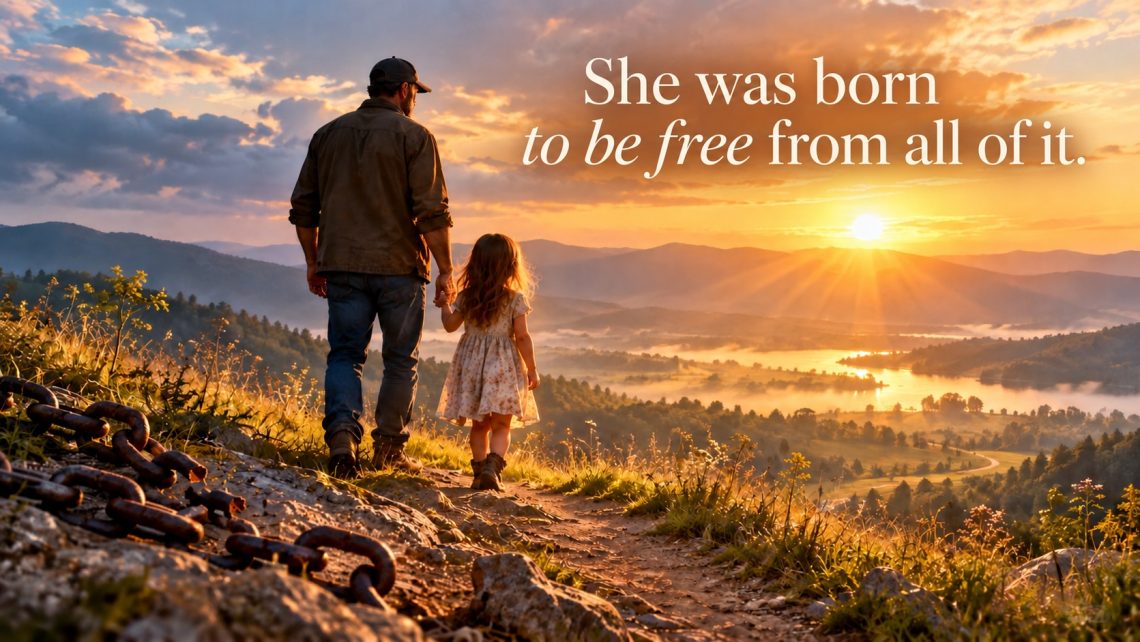
She was born to be free from all of it.
And that realization brought something into focus for me.
I couldn’t change the childhood I’d been given. But I could change what I was willing to carry into her future.
When I went No Contact with my mother on August 29, 2024, that decision was about protecting my own well-being.
But it was also about something bigger.
I was no longer willing to participate in a family dynamic that demanded silence, self-betrayal, and the abandonment of truth.
And I certainly wasn’t interested in helping preserve that dynamic for another generation.
My granddaughter deserves to grow up knowing that love doesn’t require fear.
That adults can be wrong.
That boundaries are healthy.
That telling the truth isn’t an act of disloyalty.
And that family should be a source of safety, not a place where you have to abandon yourself to belong.
I can’t control every influence she’ll encounter in life.
Nor should I.
But I can control what I contribute.
And what I refuse to contribute.
That matters.
Sometimes the Cycle Ends With an Apology. Sometimes With a Boundary.
There’s a misconception that breaking generational cycles always looks like some grand, dramatic act.
Sometimes it does.
Sometimes it means walking away from a relationship that has caused decades of harm.
Sometimes it means refusing to expose your children to behavior you’ve spent your entire life trying to recover from.
Sometimes it means being the first person in your family to say, “No more.”
But other times?
It’s much quieter.
It’s listening when your child tells you something hurt them.
It’s resisting the urge to defend yourself long enough to understand their experience.
It’s allowing your adult offspring to make choices you wouldn’t necessarily make yourself.
It’s not using guilt to secure their attention.
It’s not keeping score of everything you’ve done for them.
It’s recognizing that your children don’t “owe” you a relationship simply because you raised them.
And it’s doing the uncomfortable work of examining your own behavior rather than automatically blaming the next generation.
Sometimes breaking the cycle means leaving. Sometimes it means staying and learning to do better.
Both require courage.
And neither requires perfection.
The Legacy I Actually Want to Leave
I’ve spent a lot of time thinking about legacy these past couple of years.
Not money.
Not property.
Not whether anybody remembers my name fifty years from now.
I’m talking about the things that live on in the people we love.
The way they speak to themselves when they make mistakes.
The way they respond when someone tells them no.
The way they treat people who disagree with them.
The way they understand love, respect, honesty, and accountability.
The way they parent their own children someday.
That’s the kind of inheritance that interests me.
I don’t want my children or granddaughter to inherit my fear.
I don’t want them to inherit my hypervigilance.
I don’t want them to believe they must earn love by sacrificing themselves.
I don’t want them to spend decades trying to figure out why they never felt good enough.
And I definitely don’t want them to feel obligated to defend me against the truth of their own experiences.
If I get something wrong, I want them to know they can tell me.
If they need a boundary, I want them to know they can set one.
And if their lives take them in directions I never imagined?
I want them to know they have my love without having to seek my permission.
Because that’s what love is supposed to do.
It gives people room to become themselves.
It doesn’t demand that they remain who we need them to be.
The Cycle Ends With Me. But the Healing Doesn’t Have To.
There’s something beautiful about realizing that we get to make different choices.
Not because our past suddenly stops mattering.
Not because we’ve magically healed every wound.
And certainly not because we can guarantee our children will never experience pain.
We can’t.
But we can stop treating inherited dysfunction as an obligation.
We can stop confusing tradition with wisdom.
We can stop defending harmful behavior simply because it came from someone who raised us.
We can acknowledge what happened, take responsibility for our own contributions, and choose something better.
And perhaps that’s the greatest gift we can give the generations that follow us.
Not a perfect family.
Not a painless childhood.
Not an unrealistic promise that nothing bad will ever happen.
But a family where the truth is welcome.
Where accountability goes both ways.
Where love doesn’t come with strings attached.
Where nobody has to become smaller to keep somebody else comfortable.
And where the next generation doesn’t have to spend half its life recovering from the previous one.
My mother made her choices.
I’ve made mine.
And my children and granddaughter deserve the freedom to make theirs.
The pain may have reached me through generations I couldn’t control.
But what I choose to do with it is my responsibility.
And if the greatest legacy I leave behind is that the people who come after me have a little less to heal from?
I’ll consider that a life well lived.
Because the goal was never to become the most powerful person in my family.
It was to become someone who no longer needed power over anybody else.
And that, my friends, is how we begin to break the cycle.