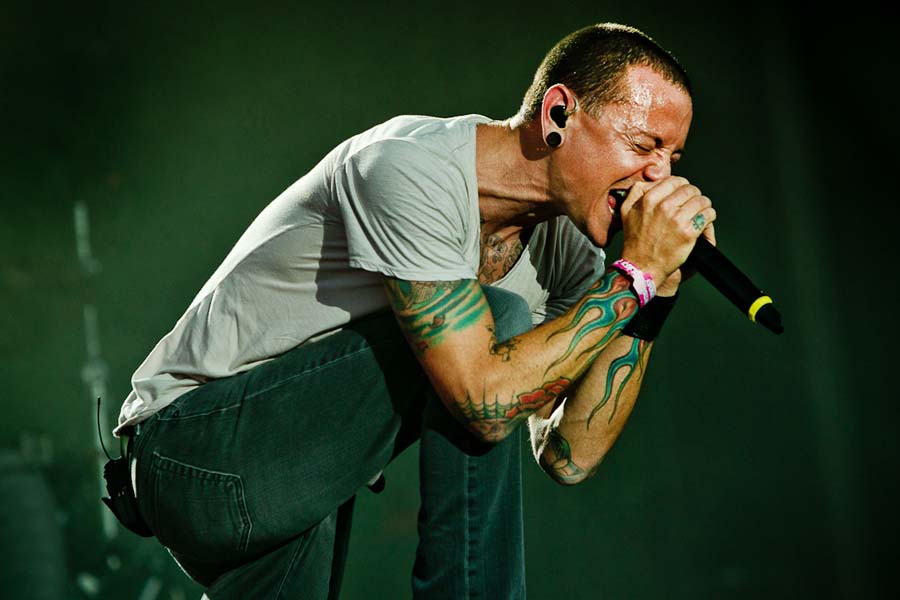
I’ve been thinking a lot about Chester Bennington lately—not because of how his story ended, but because of how much of his living story feels familiar.
Not the fame.
Not the stage.
Not the screaming crowds.
The inside.
Chester spent his life translating something unspeakable into sound. Rage, grief, abandonment, self-blame, shame—wrapped in distortion and melody. For many of us, his voice wasn’t just music. It was recognition.
And that’s where the parallels land for me.
The Wound That Starts Early
Chester survived childhood trauma that rewired his nervous system long before he had words for it. I know that terrain well. When trauma happens early—especially at the hands of those meant to protect you—it doesn’t just hurt you. It forms you.
You grow up hyper-vigilant.
Hyper-responsible.
Hyper-self-critical.
You learn to endure instead of feel. To perform instead of exist.
From the outside, you might look functional. Even successful. Inside, you’re constantly managing pressure that others never see.
Anger Turned Inward
One of the most haunting things about Chester’s lyrics is how often the anger is self-directed. Not explosive rage at the world—but corrosive rage at the self.
That’s a trauma signature.
When you’re trained early to believe you’re the problem, anger doesn’t go outward. It implodes. You become the battlefield.
I recognize that pattern painfully well.
The Mask of Competence
Chester was known for his intensity, his work ethic, his generosity, his humor. Many survivors wear that same armor. We become the strong one. The reliable one. The one who “handles it.”
But strength, when it’s built on survival instead of safety, is exhausting.
You don’t rest. You collapse.
Expression as Oxygen
For Chester, music was oxygen. For me, it’s writing.
Expression isn’t a hobby for trauma survivors—it’s regulation. It’s how we metabolize pain without letting it poison us. When expression is cut off, dismissed, or minimized, the pressure builds.
Silence is dangerous for people like us.
Where Our Paths Diverge
Here’s where I need to be clear—and grounded.
I don’t tell this story to romanticize suffering or to frame trauma as destiny. Chester’s life mattered far beyond how it ended. And my story is still unfolding.
Awareness changes the trajectory.
Naming trauma changes the outcome.
Boundaries matter. Support matters. Safety matters.
I’m still here because I’ve learned—slowly, imperfectly—that the pain was never proof that I was broken. It was evidence that something was done to me.
Why Chester Still Matters
Chester gave voice to millions who didn’t have one yet. His music cracked open conversations that polite society avoided. He made pain audible—and in doing so, made countless people feel less alone.
That legacy matters.
And for survivors reading this: if you hear yourself in his voice—or mine—know this—
You are not weak for hurting.
You are not defective for struggling.
And you are not alone in this terrain.
We don’t honor Chester by repeating his pain.
We honor him by refusing to disappear.