One of the strangest expectations placed on people healing from trauma is this idea that recovery should look peaceful.
Calm.
Forgiving.
Soft-spoken.
As if healing automatically means becoming endlessly understanding about the people who hurt you.
But many Adult Children of Narcissists discover something uncomfortable along the way:
Healing often comes with anger.
Real anger.
Not explosive rage.
Not cruelty.
But a deep, steady recognition that something profoundly unfair happened.
And for many of us, that anger arrives late.
Sometimes decades late.
Because growing up, anger wasn’t safe.
Showing frustration might have triggered punishment.
Disagreement might have been labeled disrespect.
Setting boundaries might have resulted in withdrawal, guilt, or emotional retaliation.
So anger got buried.
Redirected inward.
We learned to blame ourselves instead.
If I were better…
If I explained it differently…
If I tried harder…
But healing changes perspective.
You begin to see patterns clearly.
You recognize manipulation for what it was.
You understand how much emotional labor you carried as a child.
And suddenly anger appears — not as destruction, but as clarity.
Anger, in this stage, isn’t hatred.
It’s information.
It says:
That wasn’t okay.
That should never have been my responsibility.
I deserved better.
For survivors, anger often represents something new:
Self-protection.
It’s the nervous system finally choosing you.
The problem is, many people fear this phase.
They worry anger means they’re becoming bitter.
Or that they’re stuck.
Or that No Contact hasn’t worked.
But anger is often a transitional emotion.
Before anger comes confusion.
After anger comes indifference.
You can’t skip the middle.
Healthy anger redraws boundaries that were never allowed to exist before.
It helps dismantle lifelong conditioning that said endurance was love and tolerance was virtue.
Over time, something interesting happens.
The anger stops burning so hot.
Not because the past becomes acceptable — but because it stops defining the present.
You don’t need constant outrage once safety becomes internal.
The goal of healing was never to pretend nothing happened.
It was to reach a place where what happened no longer controls your peace.
And paradoxically, many people only arrive there after allowing themselves to feel anger honestly.
So if you find yourself angry during recovery…
You’re not failing at healing.
You’re participating in it.
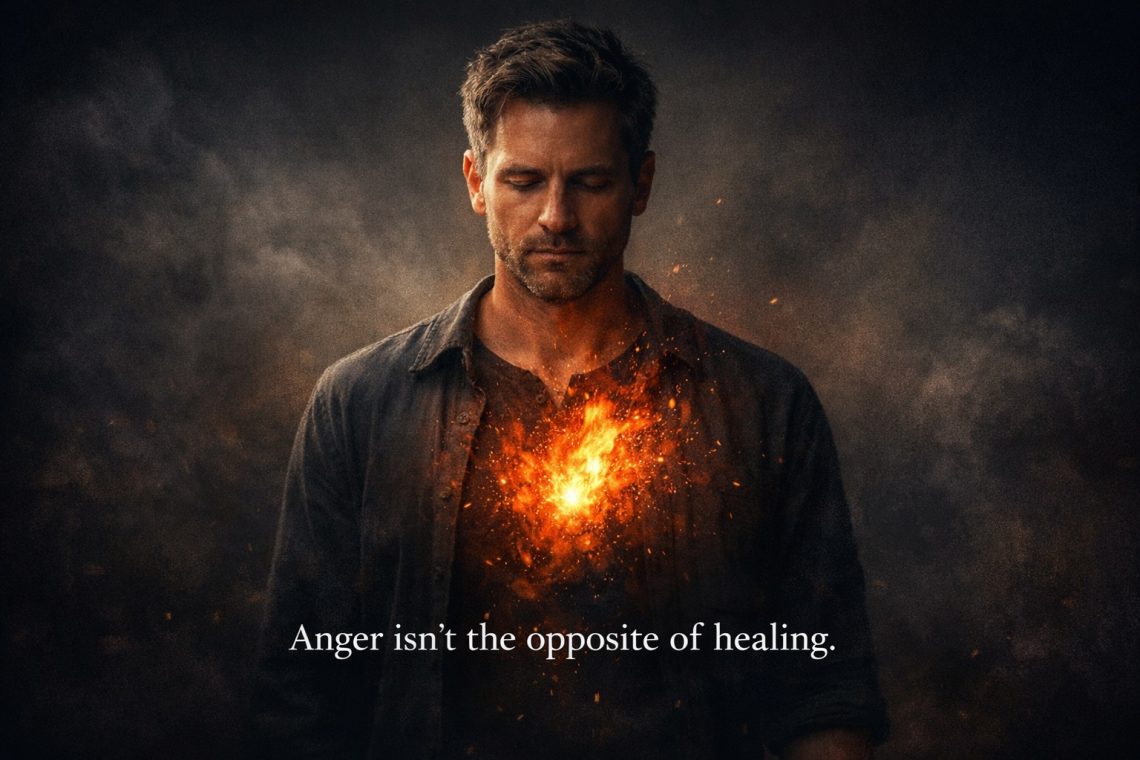
Anger isn’t the opposite of healing.
And when Indifference finally arrives, it isn’t coldness.
It’s freedom.