Some songs don’t comfort you.
They don’t help you process gently.
They don’t wrap things in something easier to hold.
They expose something you were trained not to see.
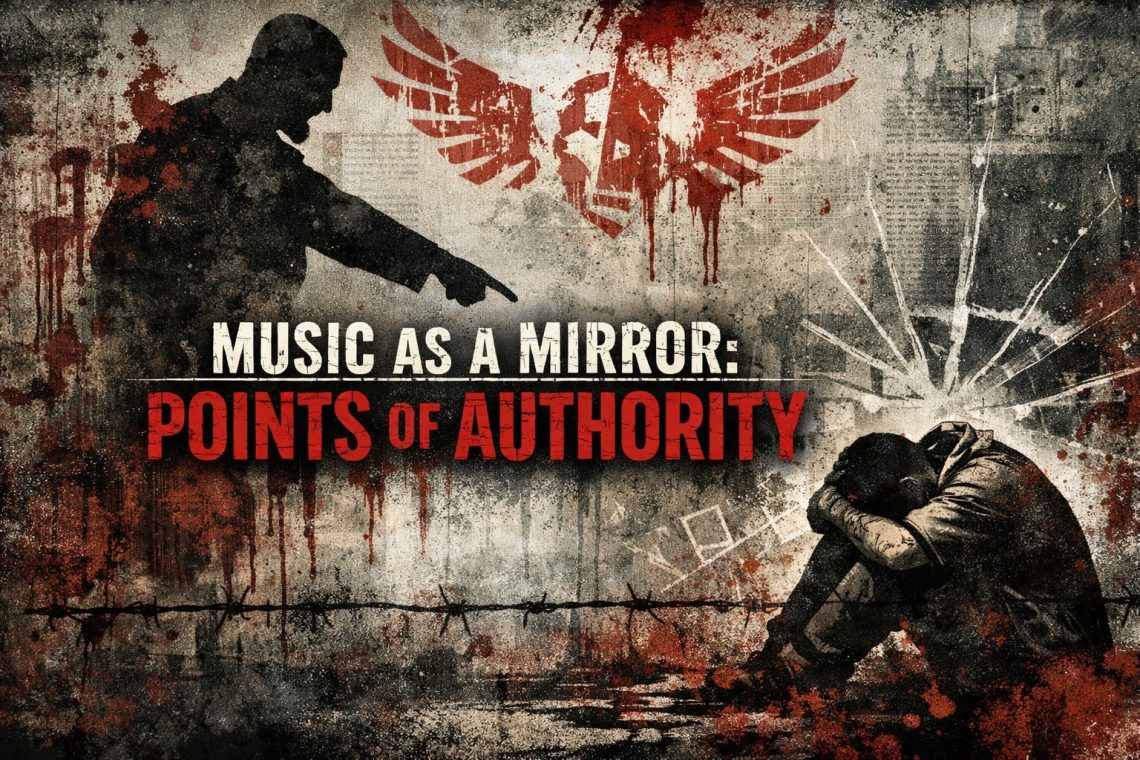
For me, Points of Authority by Linkin Park is one of those songs.
The Authority You Were Never Allowed to Question
There’s a dynamic many Adult Children of Narcissists grow up inside that doesn’t get named clearly enough.
It’s not just control.
It’s not just dysfunction.
It’s authority without accountability.
The kind of authority that:
- Cannot be questioned
- Cannot be challenged
- Cannot be wrong
Not because it’s earned.
Because it’s enforced.
And when you’re raised inside that system, you don’t experience it as abuse at first.
You experience it as reality.
“You Like to Think You’re Never Wrong”
That line doesn’t feel abstract when you’ve lived it.
It feels familiar.
It sounds like:
- Conversations that loop until you give up
- Explanations that get twisted into something else
- Being told what you meant, what you felt, what actually happened
Over time, something subtle starts to happen.
You stop trusting your own perception.
Not all at once.
Gradually.
Quietly.
You begin adjusting yourself to survive the interaction instead of questioning the system itself.
“You Have to Act Like You’re Someone”
You have to act like you’re someone
(You live what you’ve learned)
To me, this line as all about the performance. The manipulation. The mask.
Because for many toxic or emotionally immature parents, there’s an unspoken pressure running underneath everything:
They have to be someone.
Not in a grounded, secure way.
In a constructed, defended way.
So they perform roles like:
- The authority
- The victim
- The martyr
- The one who “knows better”
And that identity has to be protected at all costs.
Which means anything that challenges it—
- your independence
- your perspective
- your boundaries
—doesn’t get processed.
It gets suppressed, corrected, or punished.
So you learned to adjust.
Not because you were wrong.
Because their identity couldn’t tolerate friction.
“You Want Someone to Hurt Like You”
You want someone to hurt like you
(You live what you’ve learned)
You wanna share what you’ve been through
(You live what you’ve learned)
This is where the song gets uncomfortable.
Because it points to something many survivors resist naming:
Pain gets passed down.
Not always consciously.
Not always intentionally.
But consistently.
People who never processed their own wounds often:
- externalize them
- normalize them
- recreate them
“If I went through it, so will you.”
Not said out loud.
But lived out anyway.
That’s what “you live what you’ve learned” really captures.
Not just memory.
Pattern.
When It Turns Inward
And then the song shifts.
From them…
To what happens inside you because of it:
You love the things I say I’ll do
The way I hurt myself again just to get back at you
This is where conditioning becomes self-directed.
You learn that:
- Your value is in what you promise
- Your worth is in what you endure
- Your voice only matters if it comes with sacrifice
So you start trying to prove yourself in ways that cost you.
Overextending.
Overexplaining.
Overgiving.
Hurting yourself…
Just to feel seen.
You take away when I give in
This line is one of the most accurate descriptions of the dynamic there is.
Because it exposes the truth:
There was never a winning move.
You comply → it’s not enough
You explain → it’s used against you
You give in → something else gets taken
The rules shift.
The goalposts move.
And you stay stuck trying to stabilize something that was never designed to be stable.
My life, my pride is broken
That’s not exaggeration.
That’s accumulation.
Because over time, this doesn’t just create stress.
It erodes:
- self-trust
- identity
- confidence in your own perception
It disconnects you from yourself.
The System Was Never Meant to Make Sense
This is the turning point.
The realization that changes everything:
You weren’t confused because you weren’t trying hard enough.
You were confused because the system was built to keep you that way.
Because if you keep:
- explaining
- justifying
- trying to be understood
…you stay engaged.
And if you stay engaged, the system keeps working.
The Moment Something Breaks
There’s a shift in recovery that doesn’t feel peaceful.
It feels sharp.
It sounds like:
This isn’t normal.
This isn’t okay.
And this was never mine to fix.
That’s what this song carries.
Not chaos.
Not rage.
Clarity — with teeth.
“You Live What You’ve Learned”
That line repeats for a reason.
Because it explains both sides:
They lived what they learned.
And for a long time…
So did you.
But here’s the part that separates survival from recovery:
You don’t have to keep living it.
If This Song Hits You Differently Now…
There’s a reason.
You’re not hearing it the way you used to.
You’re hearing it with pattern recognition.
With context.
With awareness.
And that shift?
That’s not anger.
That’s the moment authority loses its power—
Because you finally see what it actually was.