For decades, I thought something was wrong with me.
Why I tired faster than other people.
Why my fuse felt shorter.
Why small disruptions could knock the wind out of me.
Why I had so little tolerance left for chaos, noise, or emotional volatility.
I told myself I was getting older.
Burnt out.
Too sensitive.
Not resilient enough.
What I didn’t understand yet was this:
My body wasn’t weak.
It was overloaded.
Survival Has a Cost — Eventually
There’s a concept in trauma science called allostatic load. It refers to the cumulative wear and tear on the body when it’s forced to stay in a stress-response state for too long.
Allostasis is how the body adapts to stress.
Allostatic load is what happens when it never gets to stop adapting.
In other words:
Survival mode works — until it doesn’t.
And narcissistic abuse is one of the most efficient ways to quietly overload a human nervous system.
Narcissistic Abuse Is Not a Single Trauma
It’s not one explosion.
It’s a thousand controlled burns.
It’s living in a system where:
- You’re constantly monitoring moods
- You’re scanning for danger that never announces itself
- You’re expected to stay calm while reality is being distorted
- You suppress anger to keep the peace
- You minimize your own needs to avoid retaliation
- You stay “reasonable” in an unreasonable environment
There’s no predictable safety.
No repair after harm.
No accountability.
No real rest.
The stress isn’t episodic.
It’s ambient.
And the body keeps track.
cPTSD: When Adaptation Becomes Injury
Complex PTSD isn’t about being unable to cope.
It’s about coping too long.
Hypervigilance.
Perfectionism.
Emotional containment.
High responsibility.
Low margin for error.
Those aren’t character flaws — they’re adaptations.
But adaptations have a shelf life.
When your nervous system is forced to stay alert for years or decades, the cost shows up later as:
- Exhaustion that sleep doesn’t fix
- Brain fog
- Emotional flooding or shutdown
- Rage spikes that feel disproportionate
- A near-zero tolerance for chaos in adulthood
My nervous system wasn’t broken.
It was overworked.
Why It Often Hits in Midlife
Allostatic load doesn’t arrive with sirens.
It accumulates quietly.
And midlife is often when the system finally runs out of room to compensate:
- The kids are grown
- The numbing strategies stop working
- The truth surfaces
- The body refuses to keep absorbing the cost
What looks like a breakdown is often something else entirely.
It’s the end of compensation.
As Dr. Bessel van der Kolk writes in The Body Keeps the Score, trauma lives in the body long after the danger passes — especially when the danger was relational, chronic, and invisible.
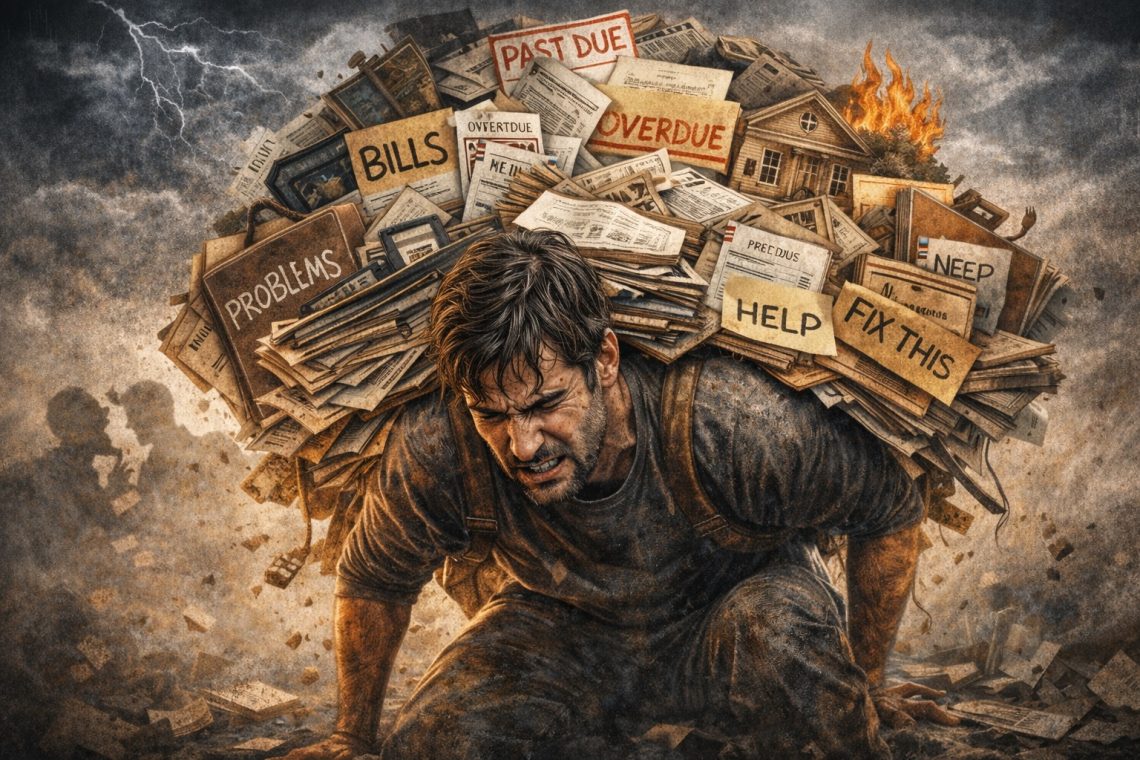
Constant Survival Isn’t Strength — It’s Debt
For most of my life, I mistook endurance for resilience.
I thought holding it together meant I was winning.
But constant survival isn’t free.
Every swallowed boundary.
Every unspoken truth.
Every moment spent managing someone else’s emotional instability.
That’s not strength.
That’s debt.
And eventually, the body collects.
Reframing the “Breakdown”
Here’s the truth trauma survivors rarely hear:
You didn’t fall apart because you were weak.
You fell apart because you carried too much for too long.
Healing isn’t about “calming down” or “letting things go.”
It’s about finally allowing the nervous system to stand down.
To rest.
To stop scanning.
To stop bracing.
Allostatic load explains why I can’t — and won’t — go back to who I was.
That version of me survived.
This one is here to live.
And that difference matters.