I came across this question recently:
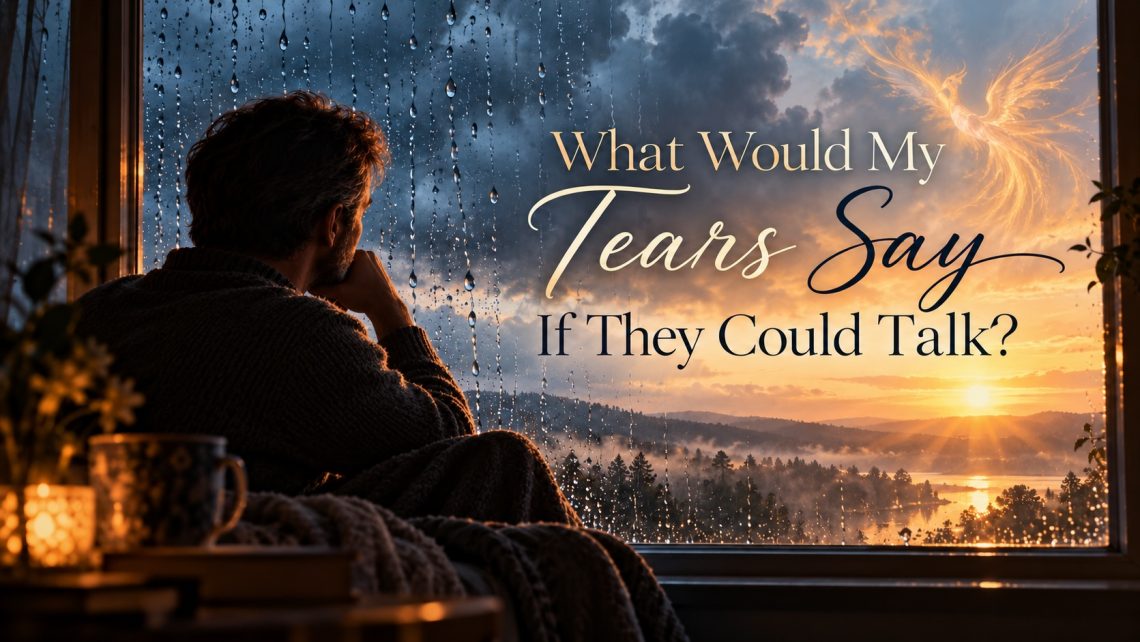
What would my tears say if they could talk?
And the longer I sat with it, the more I realized mine would probably have a lot to say.
They’ve been around for a long time.
Some of them existed before I even understood why.
They would probably tell me about the little boy who knew something felt wrong but had absolutely no language for it.
The kid who never quite felt like he belonged in his own family.
The teenager who watched his family fall apart and accepted the explanation he was given because children generally don’t stop to consider that the adults telling them their history might not actually be telling them the truth.
They would remember the years I spent trying to understand myself.
Why certain things affected me so deeply.
Why conflict could make my entire nervous system feel like it was preparing for war.
Why criticism sometimes felt less like criticism and more like danger.
Why I carried this strange, persistent feeling that something about my life didn’t quite add up.
For decades, I didn’t know the answer.
So naturally, I assumed the problem must be me.
My tears would probably say:
You weren’t imagining it.
There really was something underneath all of that confusion.
I just wouldn’t discover what it was until much later. Decades later.
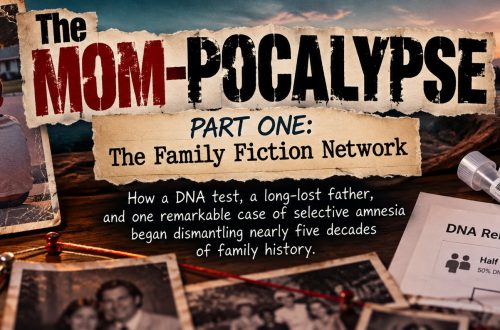
In 2021, DNA finally pulled back a curtain that had been hanging over my life for nearly five decades.
The man I had grown up believing was my biological father wasn’t.
That discovery alone was enormous.
But the DNA itself wasn’t ultimately the most painful part.
The most painful part was realizing that this wasn’t simply some forgotten family secret buried in the distant past.
There was a truth.
There was proof.
And when confronted with that proof, there was still denial.
More chances were given.
More opportunities to simply say:
“Yes. This happened. I’m sorry you had to discover it this way.”
That never really came.
And I think some of my tears from those years would say:
We weren’t crying because the truth destroyed you.
We were crying because you finally understood how long you had been living without it.
That’s an entirely different kind of grief.
Because when something like that happens, you don’t just grieve what you’ve discovered.
You start grieving backward.
Suddenly you’re looking at childhood memories differently.
Family dynamics differently.
Things people said.
Things people didn’t say.
That lifelong feeling of being somehow out of place.
Pieces begin clicking together that you didn’t even realize belonged to the same puzzle.
And then comes the anger.
Because my sister and I didn’t create that truth by taking DNA tests.
We didn’t manufacture it.
We didn’t cause it.
We simply turned on the light.
And sometimes people who have spent years protecting an illusion become far more angry at the person who turns on the light than they ever were about what happened in the darkness.
My tears were there for that, too.
Then came what I eventually started calling the Mom-pocalypse.
Because that’s genuinely what it felt like.
Not one dramatic moment.
An unraveling.
Decades of cognitive dissonance collapsing under the weight of things I could no longer explain away.
Patterns becoming visible.
Manipulation becoming recognizable.
Chaos that had always somehow been normalized suddenly looking very different when viewed from outside the family system.
And eventually there was the basement breakdown.
The point where my body seemed to finally cash a check my mind had been writing for decades.
I had spent so much of my life surviving by pushing through.
Keep working.
Keep fixing.
Keep functioning.
Keep carrying things.
Keep everyone happy.
Keep moving.
Don’t stop long enough to feel it.
That’s a survival strategy that works remarkably well.
Until it doesn’t.
My tears from that period might say:
We’ve been waiting for you.
You kept calling this strength.
Some of it was.
But some of it was survival.
And survival gets exhausting.
Then something happened that changed the equation entirely.
My granddaughter was born.
And suddenly I wasn’t looking only backward anymore.
I was looking forward.
That changed everything.
Because there’s a strange thing that happens when you’ve spent years trying to understand what happened to you.
Eventually healing stops being only about you.
You start asking different questions.
Not just:
“How much more of this can I tolerate?”
But:
“How far am I willing to let this pattern travel?”
And my answer became very simple.
It may have reached me.
It may have reached my children in ways I deeply regret.
But it does not get to claim yet another generation.
That’s where the line in the sand is.
My granddaughter didn’t create the dysfunction that existed before her.
Neither did my children.
Neither did my sister and I.
But somebody eventually has to be willing to say:
It stops here.
That realization ultimately helped lead me to No Contact.
And there were tears there, too.
Because despite what people sometimes assume, walking away from a parent isn’t necessarily some triumphant moment where you slam a door and immediately feel free.
Sometimes you cry because you finally accept something you’ve spent your entire life trying not to accept.
You aren’t necessarily grieving the relationship you had.
Sometimes you’re grieving the relationship you kept hoping might eventually exist.
You’re grieving the apology that probably isn’t coming.
The accountability you waited for.
The mother you needed.
The childhood you deserved.
The family you kept trying to repair.
And maybe most painfully:
The realization that loving someone doesn’t automatically make them safe for you.
My tears would know that story very well.
But here’s the part I don’t think I understood until recently.
Not every tear I’ve cried since then has been about sadness.
Some have been relief.
Some have come when something finally made sense.
Some have come when I’ve recognized a trauma response and realized:
“Oh. That’s where this comes from.”
Some have come while writing.
Some while remembering.
Some while finally allowing myself to acknowledge things I spent years minimizing.
Some because I realized I survived something I once thought would completely destroy me.
And some because peace still feels unfamiliar enough that occasionally my nervous system doesn’t quite know what to do with it.
Maybe those tears would say:
We’re not always evidence that you’re hurting.
Sometimes we’re evidence that you’re healing.
That’s something I’ve had to learn.
There was a time in my life when crying felt like losing control.
Now I see it differently.
Maybe tears are what happens when the body finally gets permission to put something down.
Maybe they’re words the nervous system couldn’t form.
Maybe they’re grief leaving.
Maybe they’re anger finally being acknowledged.
Maybe they’re the little kid inside you finally being believed.
Maybe they’re relief.
Maybe they’re exhaustion.
Maybe they’re even joy.
And maybe occasionally they’re several of those things, all at once.
If my tears could talk, I think eventually they would tell me this:
We saw everything.
We saw the confusion.
We saw the lies.
We saw you question yourself.
We saw you keep giving chances.
We saw you keep trying to make impossible relationships work.
We saw you survive things you didn’t even recognize as trauma yet.
We saw the DNA results.
We saw the denial.
We saw the Mom-pocalypse.
We saw you break down.
We saw you get back up.
We saw you become a grandfather.
We saw you draw a line in the sand to protect the next generation.
We saw you walk away.
And we’ve been here while you’ve slowly learned how to live instead of merely survive.
So no…
My tears wouldn’t tell me I was weak.
I think they’d tell me something very different.
They’d say:
You carried this for a very long time.
You don’t have to carry all of it anymore.
And maybe that’s what healing really is.
Not reaching some magical point where the past stops hurting.
Not pretending what happened didn’t matter.
Not forgiving things simply because other people are uncomfortable with your anger.
Maybe healing is being able to look at the truth without needing to run from it.
To grieve what happened.
To protect what comes next.
To stop confusing endurance with obligation.
And to finally allow yourself to build a life that isn’t organized around surviving someone else’s dysfunction.
So if my tears could talk?
I think, after everything else they had to say, they’d probably leave me with one final message:
You can stop holding it all in now.
The truth is out.
The cycle ends here.
And you’re finally allowed to live.