There are some betrayals in life that hurt so deeply they don’t just break your heart.
They fracture your sense of reality itself.
Most people understand betrayal in the context of relationships. Affairs. Lies. Manipulation. Broken trust. They can imagine the pain of discovering someone deceived you.
But there’s another kind of betrayal that almost nobody talks about openly.
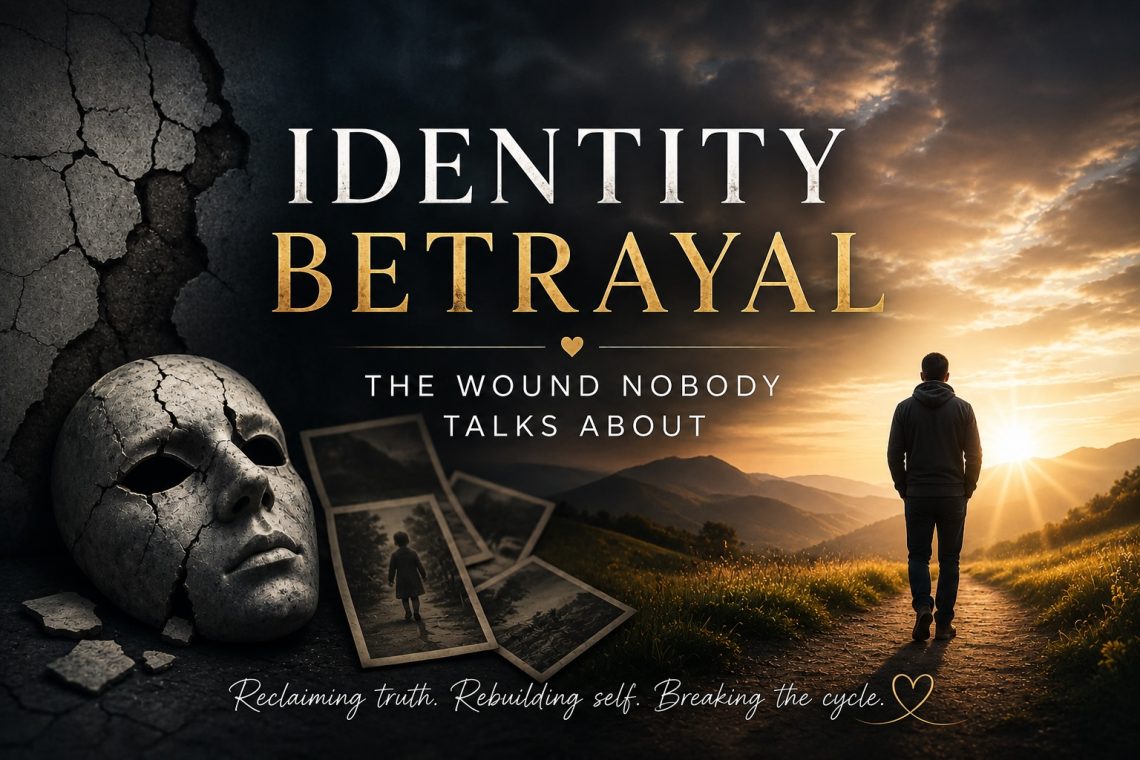
Identity betrayal.
And what makes it so psychologically devastating is that it does not simply change how you see another person.
It changes how you see yourself.
It reshapes memories.
It alters the meaning of childhood experiences.
It forces you to revisit your entire life through a completely different lens.
And when that realization comes from the person who was supposed to protect you, nurture you, and tell you the truth about your own existence…
the damage reaches far beyond ordinary betrayal.
Because suddenly, you’re not just grieving a relationship.
You’re grieving the collapse of the story you believed about your own life.
The Lie Was Never “Just” About Paternity
One thing I’ve learned through this experience is that people tend to minimize identity betrayal because they reduce it to biology.
They hear “paternity lie” and think:
DNA doesn’t change who raised you.
And while there is truth in that statement, it completely misses the psychological devastation of discovering your life story was intentionally altered by the very person entrusted with protecting it.
The deepest wound was not simply discovering who my biological father was so late in life.
It was realizing my mother knowingly allowed me to live inside a false narrative about my own identity… for decades.
That changes something fundamental inside a person.
Because once you realize the foundation itself was manipulated, your mind starts questioning everything else, too.
What was real?
What wasn’t?
What suddenly makes sense now, that never did before?
How many moments in my life were shaped by information intentionally withheld from me?
That is what people fail to understand about identity betrayal.
It creates psychological vertigo.
Your brain starts revisiting your life like an investigator reopening a cold case.
Conversations.
Family dynamics.
Emotional tension.
Confusion you could never fully explain.
Moments that felt “off” but were impossible to prove at the time.
And suddenly, decades of scattered puzzle pieces begin snapping together in ways that are both clarifying and devastating at the same time.
Your Nervous System Often Knows Before Your Mind Does
One of the strangest parts of prolonged deception is realizing your nervous system was often reacting to something real long before your conscious mind understood why.
I think that’s why survivors of deep betrayal often become hypervigilant and detail-oriented afterward.
People mistake that behavior as obsession.
But prolonged deception trains the brain to constantly search for stability because reality itself stopped feeling safe.
When your instincts were dismissed…
when your confusion was minimized…
when your emotional reactions were reframed as overthinking…
your mind eventually learns to distrust itself.
That is one of the cruelest parts of identity betrayal.
You stop trusting your own internal compass while unknowingly living inside someone else’s manufactured version of reality.
And when the truth finally surfaces, there’s often a painful realization underneath the anger:
My nervous system was trying to tell me something all along!
The Grief Nobody Sees
Identity betrayal creates a very specific kind of grief because you’re mourning multiple losses at once.
You grieve the lie itself.
You grieve the lost years.
You grieve the version of your life you thought was real.
You grieve the trust that can never fully return.
You grieve the childhood you now understand differently.
You grieve the emotional energy spent trying to make confusing dynamics make sense.
And perhaps most painfully…
you grieve the realization that the person who should have protected your sense of self was willing to sacrifice it in order to protect the lie.
That realization changes a person permanently.
Because once you see that level of deception clearly, it simply can’t be unseen.
The Full Unmasking
For me, the full depth of that reality crashed into place on Mother’s Day, 2024.
Ironically, a day culturally associated with love, safety, and maternal connection became the day the illusion finally collapsed completely.
What began as questions eventually became undeniable truth.
And with that truth came something survivors know intimately:
the horrifying clarity that arrives, once years of confusion suddenly start making perfect sense.
I think people imagine these moments as explosive confrontations.
But honestly, some of the most life-altering moments happen quietly.
A sentence.
A realization.
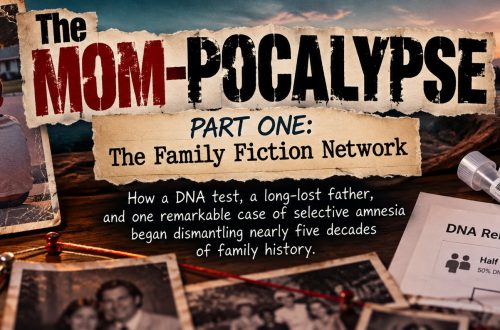
A DNA result.
A truth you cannot unsee once it lands.
And afterward, the world looks exactly the same externally…
while internally, nothing is the same anymore.
The Surreal Space Between Grief and Hope
What made this chapter of my life even more emotionally disorienting was the timing of everything that followed.
Because only weeks after the full unmasking, my granddaughter was born on June 15th, 2024.
And there is honestly no perfect language for the emotional space that existed between those two events.
On one side was the collapse of an identity built on deception.
On the other side was the birth of a completely new generation.
It felt surreal.
Like standing between grief and hope at the exact same time.
I was confronting the reality of inherited dysfunction, manipulation, and emotional distortion…
while simultaneously looking at a child who represented the possibility that those cycles could finally end.
And I think that contrast changed me forever.
Because for the first time, the decision in front of me became bigger than preserving family narratives or protecting appearances.
It became about protecting the future.
Why No Contact Became Necessary
People who have never experienced severe betrayal often misunderstand No Contact.
They see it as punishment.
Bitterness.
Cruelty.
Overreaction.
But what many survivors eventually realize is that No Contact is often what happens when reality itself becomes unsafe inside the relationship.
At some point, the nervous system simply cannot continue surviving inside chronic deception, manipulation, denial, rewriting of history, and emotional instability.
And eventually you’re forced to ask yourself a brutal question:
How much of myself must I abandon, in order to keep participating in this relationship?
That question changed my life.
Because I realized the cost was no longer only affecting me.
My children mattered.
My granddaughter mattered.
The emotional environment surrounding future generations mattered.
So on August 29th, 2024 — what my family calls Judgment Day — I went No Contact.
Not because I stopped caring.
Not because I wanted revenge.
But because at some point, self-preservation becomes necessary.
And because my granddaughter deserves the chance to grow up completely untouched by the emotional poison that shaped so much of the generations before her.
That matters to me more than preserving appearances ever could.
The Difference Between Secrets and Identity Betrayal
Families often minimize these kinds of wounds by calling them “family secrets.”
But I think survivors instinctively understand something much deeper.
When someone intentionally withholds or manipulates core truths about your identity, your origins, your reality, or your history…
that is not simply secrecy.
It becomes a form of identity betrayal.
Because it steals something foundational:
your ability to fully understand yourself while building your life.
And healing from that kind of wound is not quick.
Because rebuilding trust in yourself after years of reality distortion takes time.
Healing After Identity Betrayal
Healing from identity betrayal is not about pretending it didn’t affect you.
It’s about slowly learning that someone else’s deception does not have to become your permanent definition.
It’s learning to trust your instincts again.
Learning to stop apologizing for seeing patterns clearly.
Learning that protecting your peace is not cruelty.
Learning that grief and hope can coexist.
Learning that truth may shatter illusions…
but illusions were never stability to begin with.
And maybe most importantly:
it’s realizing the cycle can stop with you.
Not perfectly.
Not instantly.
But intentionally.
For me, that’s part of what healing looks like now.
Not erasing the story.
Not pretending the wound didn’t happen.
But refusing to pass the distortion forward into the lives of the people I love most.
Especially the little girl who entered this world right in the middle of the fiercest storm of my life.
She deserves truth.
She deserves emotional safety.
She deserves relationships where love does not require sacrificing reality.
And honestly…
so did I.