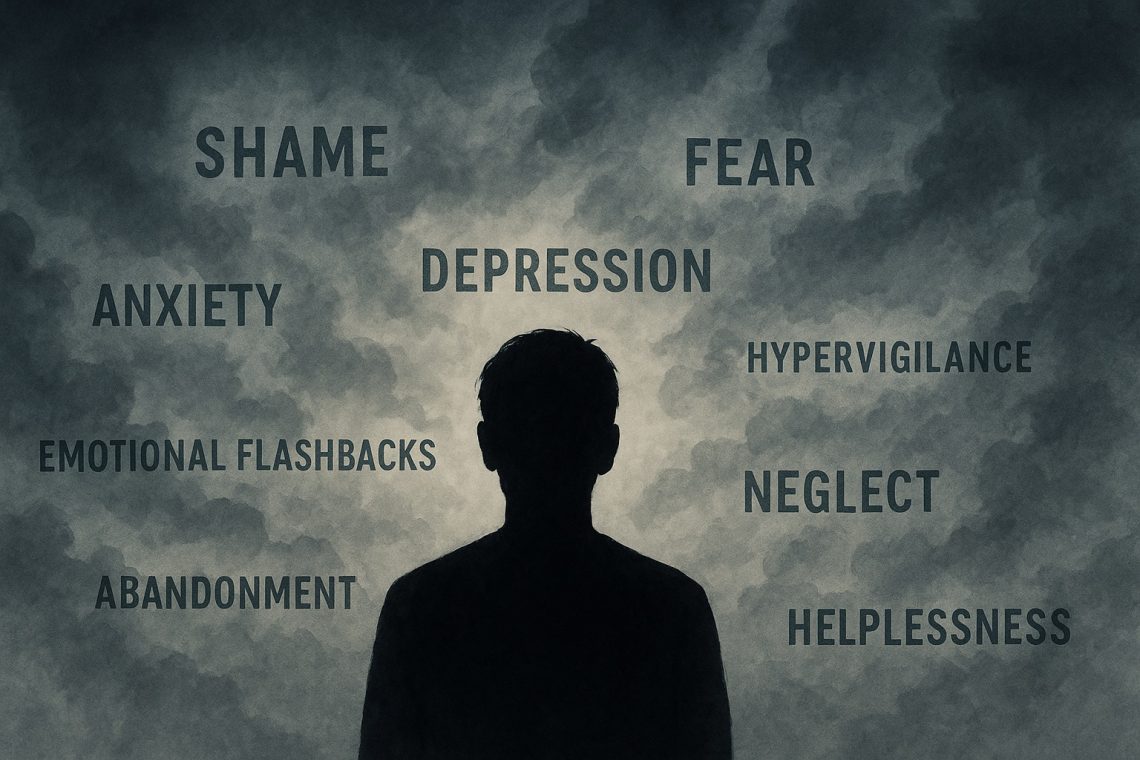
For most of my life, I thought addiction was the problem.
The shame.
The struggle.
The guilt.
The constant attempts to “fix myself.”
The belief that if I could just stop that, everything else would finally fall into place.
But the truth — the truth I didn’t discover until the Mom-pocalypse resulted in the whole system of lies collapsing — is this:
Addiction wasn’t my problem.
It was my survival strategy.
And once I finally named the real wound — cPTSD — something unexpected happened:
My emotions didn’t calm down.
They got louder.
They got sharper.
They hit with a kind of intensity I wasn’t prepared for.
At first, I thought it meant I was getting worse.
Now I understand it means I’m finally healing.
Let me explain.
Addiction Was the Anesthetic, Not the Illness
For years, I thought I was broken.
I thought the drinking, the numbing, the compulsions —
that was the thing ruining my life.
I didn’t know I was actually trying to treat:
- untreated trauma
- emotional neglect
- constant anxiety
- parentification
- chronic fear
- identity collapse
- the psychological fallout of living inside a narcissistic family system
Addiction wasn’t the enemy.
It was the only coping tool I had.
When you grow up without emotional safety, you don’t learn how to feel.
You learn how to survive.
So of course I gravitated toward whatever stopped the internal screaming.
Of course it felt like the problem — it was the only part of the pain anyone could see.
But it wasn’t the root.
The root was trauma that had never been named.
Naming the Trauma Makes the Feelings Rise
This part shocked me.
You’d think understanding cPTSD would:
- calm things down
- make life make sense
- help me feel more stable
- settle the emotional chaos
But instead?
It unlocked everything.
The moment I said,
“This wasn’t addiction — this was trauma,”
my body said:
“Finally. Now we can feel.”
Trauma freezes your emotional world.
Healing thaws it.
And thawing isn’t peaceful — it floods.
Suddenly I could feel:
- grief for the childhood I lost
- anger for the adult years spent blaming myself
- sadness for the years I thought I was the problem
- compassion for the boy who didn’t stand a chance
- rage at the lies I was raised on
- tenderness I didn’t know I was capable of
- vulnerability that scared me
- clarity that shook me
These emotions didn’t come out of nowhere.
They were always there.
I was just finally safe enough to feel them.
Feeling More Doesn’t Mean I’m “Getting Worse”
This is where trauma healing plays tricks on the mind.
When emotions surge, part of me still panics:
- “I thought I was past this.”
- “Why is this hitting so hard?”
- “Am I backsliding?”
- “Am I failing at healing?”
No.
Feeling more is not regression.
It’s capacity.
It means:
- My body is no longer in freeze mode.
- My nervous system trusts me.
- I’m grounded enough to handle what once overwhelmed me.
- I’m processing instead of suppressing.
- I’m grieving instead of numbing.
cPTSD recovery doesn’t follow a straight line.
It follows a spiral.
You revisit things — not because you failed,
but because you’re ready to heal them at a deeper layer.
The Shame Was Never Mine
Looking back, I can see the cruelest part of the whole situation:
I spent years criticizing myself for the exact coping strategies that kept me alive.
I thought I was weak.
I thought I was flawed.
I thought I lacked discipline.
I thought my emotions were proof something was wrong with me.
But the truth?
Those behaviors weren’t moral failing.
They were adaptive intelligence.
They kept me stable in an environment that was emotionally unsafe.
Once the truth surfaced — about my childhood, my mother, the lies about my paternity, the manipulation, the generational distortion — addiction didn’t make sense anymore.
Not because I found discipline.
But because I found context.
Context rewrites everything.
The Emotions Are Strong Now Because I’m Finally Strong Enough to Feel Them
This is the part I wish every cPTSD survivor knew.
When your emotions become sharper during healing:
you’re not falling apart.
You’re waking up.
You’re reconnecting.
You’re thawing out.
You’re reclaiming pieces of yourself you haven’t touched in years — or decades.
The intensity isn’t a sign of weakness.
It’s a sign of finally feeling alive.
It means the survival phase is ending, and the feeling phase has begun.
And feeling — even when it hurts — is the doorway to freedom.
What I Know Now
My emotions aren’t stronger because I’m fragile.
They’re stronger because:
- I’m no longer numbing them.
- I’m no longer misdiagnosing myself.
- I’m no longer fighting the wrong enemy.
- I’m no longer trying to “fix” symptoms instead of the wound.
- I’m finally connected to the truth of my story.
And truth, once uncovered, demands to be felt.
Not all at once.
Not perfectly.
But fully.
The Bottom Line
I didn’t get worse after naming my cPTSD.
I got honest.
I got real.
I got connected.
And my emotions — wild, loud, vivid — were not a sign of collapse.
They were a sign of awakening.