There’s a moment from when I was about fifteen years old that I didn’t talk about for decades.
During the chaos surrounding my mother and step-father’s divorce, my mother once threatened to put my sister and me into the car and drive us all off a bridge.
That wasn’t the only time something like that was spoken aloud. But that one landed differently.
My sister didn’t even remember it until I brought it up after everything finally blew open. And even I hadn’t thought about it in years — not until the truth came out and the fog lifted.
But here’s the detail that tells me my body never forgot:
For a long time after that threat, I walked almost everywhere.
I was genuinely afraid to get into the car with her.
That wasn’t teenage rebellion.
That wasn’t drama.
That was my nervous system making a clean survival calculation:
If I don’t get in the vehicle, I can’t be killed in it.
No one ever sat me down and said, “That was wrong.”
No one ever protected us from that instability.
So my body built protection on its own.
Silently.
What You Carry When a Parent Becomes a Threat
When the person who is supposed to keep you safe becomes the source of existential danger, something fundamental rewires.
Your nervous system doesn’t just learn:
“People are unpredictable.”
It learns:
“My life can end without warning at the hands of the person in control.”
That doesn’t create ordinary anxiety.
That creates:
- a permanent exit-strategy mindset
- hyper-vigilance around confinement
- fear of being dependent
- a need for mobility at all times
- and a deep intolerance for feeling trapped
You don’t grow out of that.
You either stay stuck in it…
or you slowly learn how to update it.
Why I Always Need a Way Out
Fast-forward to adulthood, and suddenly my “quirks” make a different kind of sense.
I don’t just like having vehicles.
I like knowing that if one goes down, I still move.
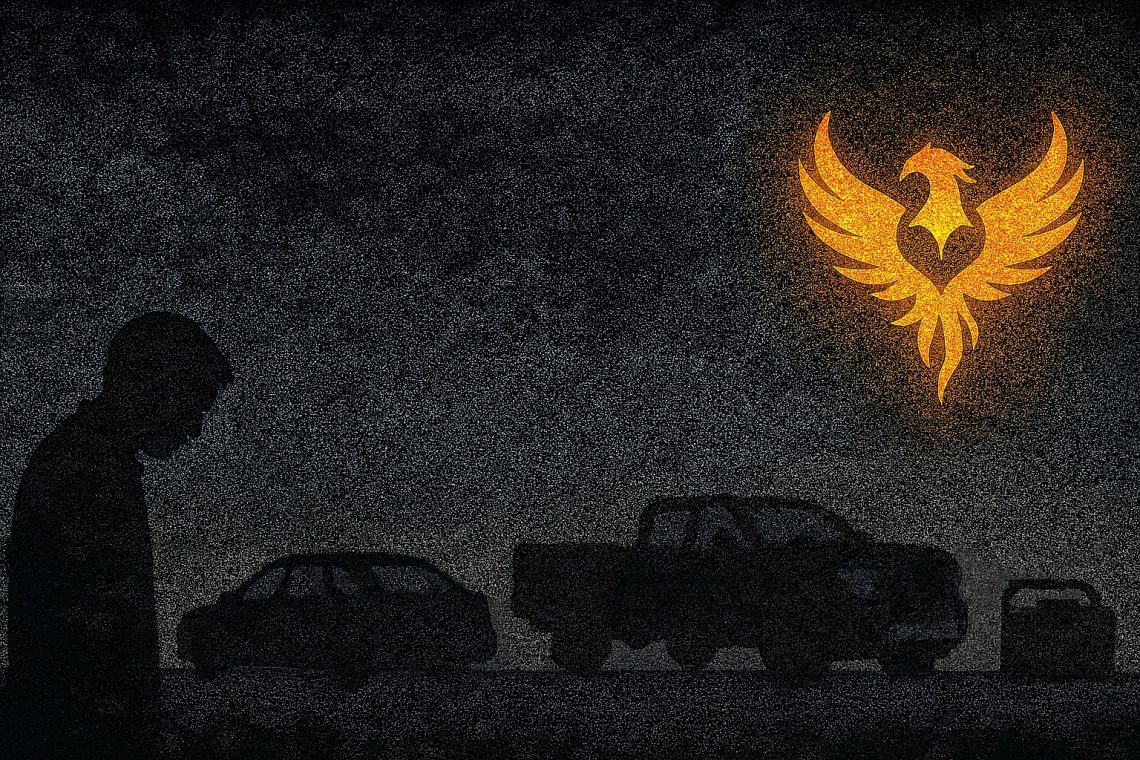
At one point, I owned four running, legal vehicles at the same time.
My roommate at the time, hated it.
Of course! I took up nearly all the parking. I don’t blame him!
Eventually I gave one to my daughter and sold another to restore some balance.
But the impulse wasn’t about excess.
It was about never being stranded again.
I gravitate toward long-range reliability.
Diesels.
Reliable engines.
Things that last.
Because my body learned:
If I can’t move, I’m not safe.
The Generator I’ve Never Used
Last year, a windstorm knocked power out in my neighborhood.
My reaction was immediate:
I bought a generator.
Then my boss called and offered to pay for a hotel for me to stay and work from until power was restored.
I accepted the offer, of course!
That Generator? It hasn’t even been broken in yet.
And that used to make me feel foolish — like I overreacted.
Now I see it differently.
My nervous system wasn’t responding to a power outage.
It was responding to:
- loss of control
- vulnerability
- isolation
- the idea of being cut off from agency
Buying the generator wasn’t panic.
It was my body saying:
Never again.
The fact that I haven’t needed it yet isn’t proof it was unnecessary.
It’s proof that safety works quietly.
Why I Keep Redundant Everything
Multiple computers.
Multiple tool sets.
Backup internet.
Fallback systems for my fallback systems.
From the outside, it can look extreme.
From the inside, it feels like:
Nothing will ever shut me down completely again.
This isn’t about gadgets or productivity.
This is about self-rescue.
Some people grew up knowing:
“If something breaks, someone will help.”
I grew up learning:
“If something breaks, you’d better already have another one.”
Preparedness Isn’t Paranoia When You Grew Up Trapped
For most of my life, I labeled this pattern as anxiety.
Or control.
Or extremism.
Or distrust.
Now I see the truth:
This is what happens when a child learns they may need to save themselves.
It’s what happens when:
- authority becomes dangerous
- dependence becomes risky
- permanence becomes a threat
- and being trapped once meant almost dying
My adulthood didn’t invent these instincts.
It translated them into hardware, backup plans, redundancy, and exits.
Same survival logic.
Different tools.
The Healing Edge
The work now isn’t to rip out the preparedness.
The work is to teach my nervous system something new:
That I no longer live inside a system where annihilation is possible without warning.
That autonomy can be a preference, not just a requirement for survival.
That not every closed door is a trap.
That I don’t have to live as if catastrophe is imminent in order to be safe.
Preparedness doesn’t have to disappear.
But it no longer needs to be driven by terror.
What I Know Now
I wasn’t paranoid.
I was trained by chaos.
I wasn’t excessive.
I was building exits.
I wasn’t broken.
I was making sure that fifteen-year-old never got trapped in that car again — even symbolically.
And now, for the first time in my life, I get to decide:
How much protection is still necessary…
and how much safety I’m finally allowed to trust.