I’ve been doing a lot of reflecting lately.
Not just on my own story — but on timing.
Because looking back, it’s becoming harder to ignore something that feels almost impossible to see while you’re living through it:
My life didn’t unravel because of one event.
It was a perfect storm.
I was 26 when 9/11 happened.
Old enough to understand exactly what I was watching. Young enough to still believe the world generally made sense.
I still remember the silence when they shut the airspace down. No planes overhead. No contrails. Just an eerie, unnatural quiet — like the world itself had paused to process what had just happened.
Something shifted that day.
Not just politically or culturally — internally.
The illusion that life was predictable disappeared — before lunch.
Then came 2008.
Right when many of us in Gen X were finally beginning to build financial footing — careers stabilizing, perhaps homes purchased, maybe even some retirement accounts starting to mean something — and then the floor dropped out.
Hard work suddenly wasn’t protection anymore.
Security turned out to be conditional.
Another storm.
Then the pandemic arrived.
The entire world slowed down at once. Isolation replaced routine. Mortality stopped being abstract. People checked on aging parents. Families reconnected. Old relationships resurfaced.
Including mine.
Re-engaging with my mother during COVID wasn’t planned. It happened organically, the way many families drifted back together during uncertainty. Crisis has a way of pulling people toward familiar bonds — even complicated ones.
In August 2021, my sister and I moved Mom to Washington so she could live with my sister.
Two months later, DNA results rewrote my origin story.
Everything I thought I knew about myself fractured almost overnight.
And once truth enters the room, it doesn’t politely sit in the corner.
It rearranges everything.
For a long time, I tried to reconcile the new truth with the life I had lived. I assumed the deception surrounding my paternity had been shared — that the man who raised me must have known, or at least participated in maintaining the lie.
That belief, painful as it was, still allowed the story to make sense.
Then came Mother’s Day, 2024.
That was the day my sister told me something that changed everything again:
He hadn’t known.
The man I now understand to have been my step-father was not part of the deception. He had briefly suspected something early on, but never received confirmation. He lived his life believing the same story I had.
In a single conversation, decades of assumption collapsed.
The betrayal I had understood as collective suddenly stood alone.
And that realization hit harder than the DNA results themselves.
Because it meant the foundation of my identity hadn’t been shaped by misunderstanding or shared secrecy — but by a lie carried and protected by one person.
The mask didn’t dramatically fall.
It simply could no longer be held in place.
Once seen clearly, the lifelong pattern became impossible to deny.
And when that same pattern extended toward my son, the next decision I made, became unavoidable.
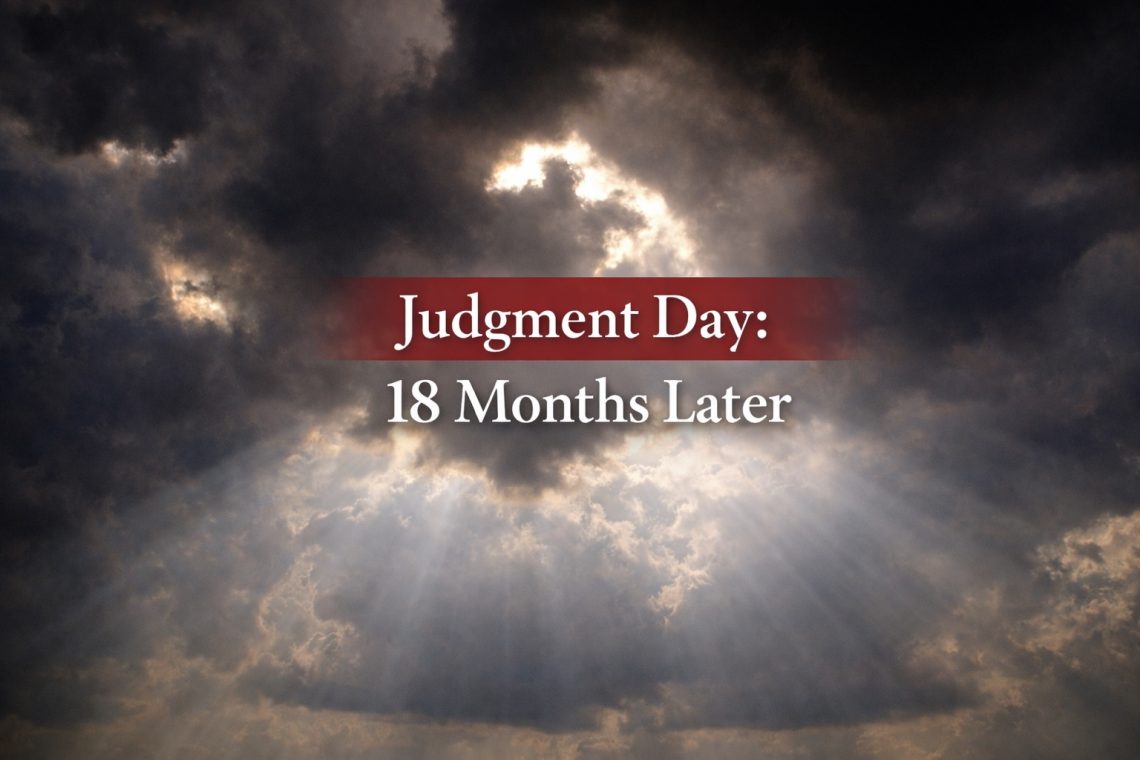
That was Judgment Day.
August 29, 2024.
No Contact wasn’t anger.
It wasn’t punishment.
It was preservation.
And here’s what I see now, eighteen months later:
None of these storms happened in isolation.
Gen X grew up learning independence early. We watched institutions fail, economies collapse, and certainty evaporate more than once. Many of us learned to adapt instead of question. Endure instead of stop. Function instead of feel.
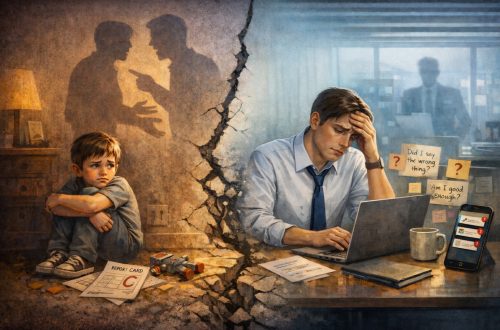
Add childhood trauma to that mix, and survival becomes second nature.
You learn to manage chaos so well that you don’t realize how much energy survival costs.
Until the storms finally pass.
That’s the strange part no one talks about.
After everything settles… there’s quiet.
And in that quiet comes clarity.
I’m realizing that what felt like my life falling apart was actually multiple systems collapsing at once — global, generational, and deeply personal — all converging at the exact moment in life when human beings naturally begin asking harder questions:
Who am I, really?
What was mine — and what wasn’t?
How do I want the rest of my life to feel?
The perfect storm didn’t destroy me.
It stripped away illusions that couldn’t survive truth.
What remains isn’t bitterness.
It’s alignment.
“Sometimes, the feelings fit.”
Peace mixed with anger.
Grief mixed with freedom.
Loss mixed with possibility.
For the first time, I’m not organizing my life around survival.
I’m organizing it around reality.
And maybe that’s what storms are for.
Not to end the story…
…but to clear the sky enough that you can finally see where you’re going next.