
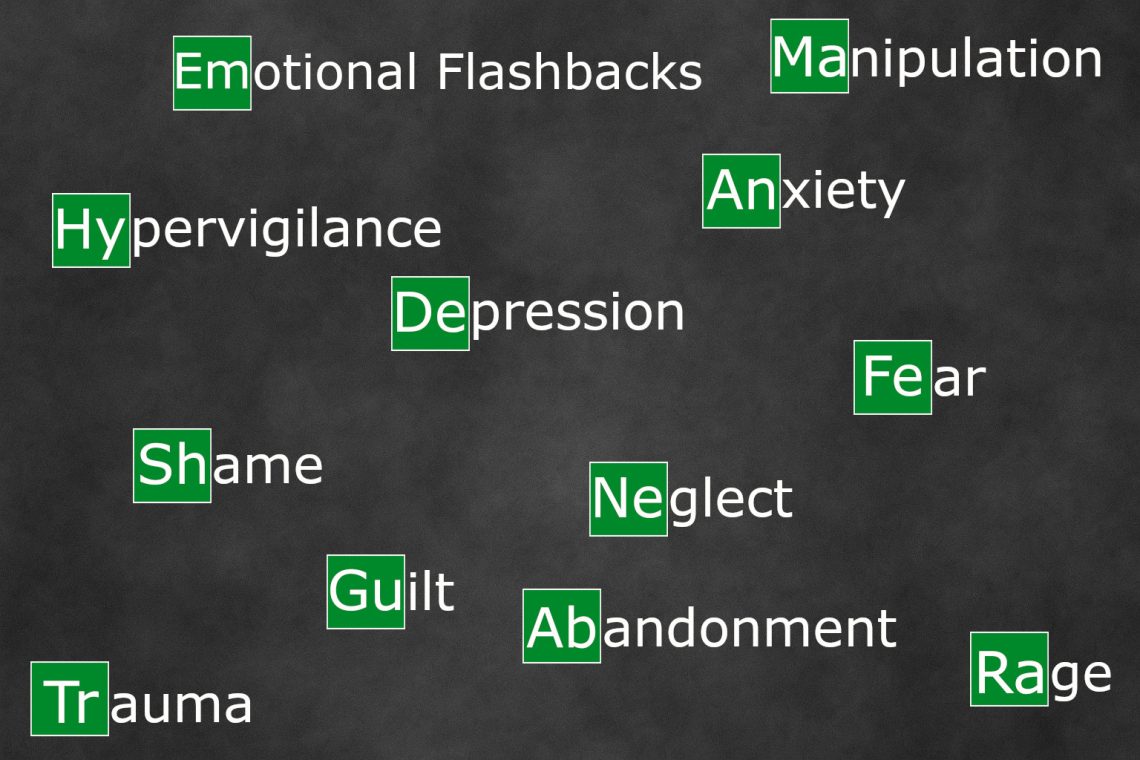
I’ve been joking lately that hitting 50 made me feel a little like Walter White — just without the urge to build a meth empire.
But the more I sit with that comparison, the more I realize it’s actually… not a joke at all.
There’s something real — something psychological, emotional, and developmental — that happens when a trauma survivor steps into midlife after decades of being the responsible one, the reliable one, the one who holds it all together.
It’s the moment where the façade cracks, the truth breaks through, and you can no longer tolerate living small, muted, or half-alive.
Let me elaborate…
Like Walter White, I Spent Decades in “Responsible Mode”
Walter White begins Breaking Bad as a man doing everything “right.”
He works hard. He provides for his family. He keeps the peace.
He plays the role expected of him — even if it means suppressing the larger life he once imagined.
That part? I get.
From 1993 through the mid-2000s, I worked in retail, fast food, and call centers — jobs built around constant interruption and emotional labor.
From the mid-2000s to now, I’ve worked in IT and telecom support — steady, dependable work that I take pride in.
My job puts food on the table, pays the bills, and has been a foundation of stability.
But it doesn’t feed my spirit.
For decades, I lived in a state of constant reactivity — ringing phones, urgent emails, shifting priorities, people needing help right now.
And because it matched the environment I grew up in, it felt familiar. It made sense.
I was good at it.
But “good at it” and “alive in it” aren’t the same thing.
The Breaking Point Isn’t About Age — It’s About Awareness
Walter White didn’t change at 50 because of the number.
He changed because he had a moment of undeniable clarity.
For me, that moment wasn’t a diagnosis — it was the collapse of a lifelong family narrative:
- the DNA revelation
- the unmasking
- the manipulations finally exposed
- the impossible choice
- and ultimately, the No Contact boundary that saved my sanity and my future
Once the truth came out, the old version of me couldn’t survive.
And the version that replaced him wasn’t built on fear — it was built on reality.
When the story you’ve lived under dissolves, you don’t go back to sleep.
When the Trauma Loop Ends, Desire Finally Shows Up
People who grow up in narcissistic family systems spend their entire youth — and often their entire adulthood — in emotional triage.
You don’t dream in that state. You endure.
But something unexpected happened once the family fog cleared:
I started wanting things.
Real things.
Healthy things.
Creative things.
Writing.
Healing.
Telling the truth.
Building a legacy.
Being the version of myself I never had permission to be.
It wasn’t a crisis.
It was the first pulse of authentic desire.
Walter White Found Authenticity — Tragically Late, but Truthfully
For all the destruction Walter caused, the most important moment of the entire series happens in “FeLiNa,” during his final conversation with Skyler.
For the first time in five seasons, he drops every excuse and every mask.
He finally tells the truth:
“I did it for me. I liked it. I was good at it. And I was really… I was alive.”
That moment isn’t about his meth empire.
It’s about authenticity.
It’s the first and only time he stops lying to himself — and to the person who loved him before the false identities.
It arrives at the end of his life, making it tragic.
But the truth he speaks?
It’s universal:
A man cannot live his entire life as who he “should” be.
At some point, he must face who he actually is.
I’m Hitting That Same Threshold — But Choosing a Different Path
When I reached 50, I didn’t crave danger or power.
I craved honesty.
Honesty with myself.
Honesty about what fulfills me.
Honesty about how I want the next chapter of my life to feel.
And this is where my journey diverges from Walter White’s:
- My authenticity isn’t arriving at the end of my life; it’s arriving in the middle of it.
- My awakening isn’t destructive; it’s creative.
- My work still supports my livelihood — and I’m grateful for that — but my writing is what feeds my soul.
- I’m not running from mortality; I’m running toward meaning.
For the first time, I can admit:
The life I built was built for survival.
The life I’m dreaming of now is built for selfhood.
I’m not abandoning my responsibilities.
I’m expanding beyond the limits they once defined.
Reinvention at 50 Isn’t Late — It’s Right on Time
This is the age where the patterns finally make sense.
Where you stop apologizing for your needs.
Where the nervous system rejects environments that once felt normal.
Where the real voice — the buried one — finally emerges.
This isn’t midlife crisis.
This is midlife correction.
It’s the moment where you stop performing your life and start living it.
Walter White found his truth in the final minutes of his story.
I’m finding mine now — with plenty of story left to write.