There’s a part of my story I don’t talk about often — not because I’m hiding it, but because I needed enough distance from the chaos to see it clearly.
When the truth about my mother began unraveling —
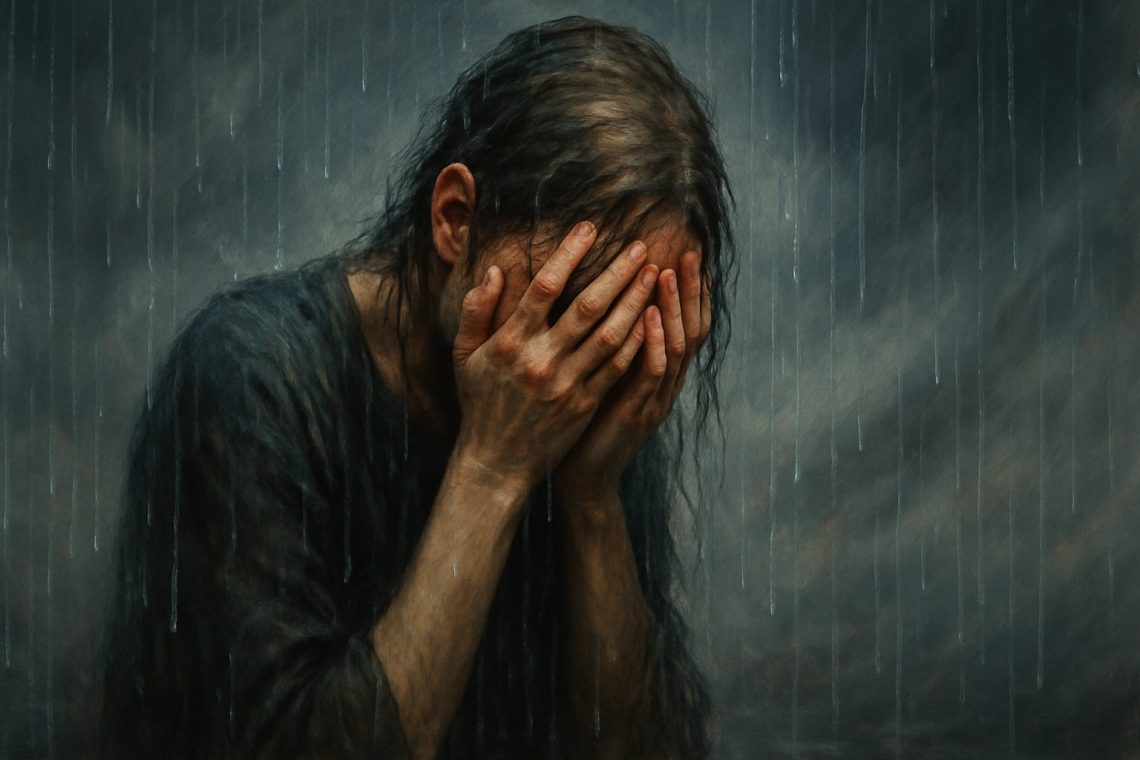
the DNA revelation, the hoarding, the manipulation, the collapse of my identity, the shockwaves propagating out in every direction — I was drowning.
Not figuratively.
Not dramatically.
Drowning.
My daughter had just given birth.
My granddaughter was days old.
My daughter was navigating the newborn phase, exhaustion, hormones, survival mode.
And I was navigating the implosion of my entire family system — the kind of collapse that rearranges a person at the cellular level.
So I did what trauma survivors often do when their world detonates:
I reached for the people I loved most.
I wrote long messages.
I poured out fear, grief, confusion, betrayal, panic.
I emptied everything that had been buried for decades.
And sometimes… I got crickets in return…
Two months of silence at one point.
Back then, it felt like abandonment.
Now, I can admit something I couldn’t see then:
I wasn’t being abandoned — I was overflowing.
My daughter wasn’t rejecting me.
She was overwhelmed.
She was stretched thin, exhausted, healing, becoming a mother for the first time.
She wasn’t equipped to carry my avalanche.
And my son — though in a different situation — also felt the weight of what I was unloading. Not maliciously. Not intentionally. But survival instincts from a lifetime of parentification don’t evaporate just because the truth finally breaks through.
I wasn’t trying to make them responsible for my emotions —
but I was, unintentionally, placing a massive emotional weight on young adults who were still finding their own footing.
This is the part that’s hard to say, but necessary:
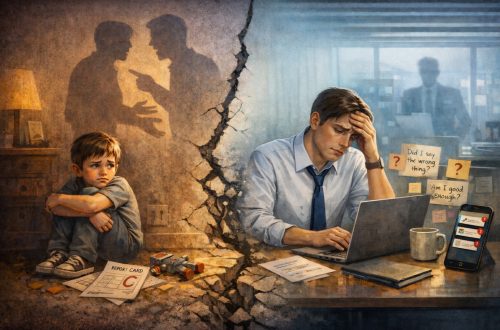
I had been parentified my whole life… and in my pain, I briefly repeated the pattern downward.
Not in the same destructive way my mother did.
Not with manipulation or control.
But with emotional overflow — the kind no child, even an adult child, should have to hold.
And here is the most important part:
The moment I saw it, I stopped.
I rerouted that overflow into:
- my recovery communities
- my writing
- my grieving process
- my support systems
- my own internal work
Because the truth is this:
My children are not my emotional regulators.
They are not my therapists.
They are not the place I go to fall apart.
That is not their weight to carry.
They deserve better than the legacy I inherited.
And I mean this with gentleness toward myself:
I was doing my best with the tools I had at the time.
Survivors often don’t realize how much they’re carrying until it bursts out of them.
We finally feel safe enough to speak, and it all comes out all at once.
But healing includes learning where our story belongs —
and where it doesn’t.
What I Know Now
I can love my kids deeply without leaning on them for emotional survival.
I can be honest without putting them in the role of caretaker.
I can share my story without making them responsible for my pain.
And I can model what recovery looks like:
- owning what was mine
- repairing where needed
- choosing differently
- breaking patterns that lasted generations
A Note to My Kids (If You Ever Read This)
I want you to know and understand this clearly:
I am sorry for the moments when my pain spilled over onto you.
I was overwhelmed, hurting, and unlearning decades of conditioning in real time — but that doesn’t make the weight you felt any less real.
That’s on me. I own that.
You owed me nothing in those moments.
Not a response.
Not comfort.
Not understanding.
You were navigating your own lives, your own challenges, your own beginnings.
I don’t hold any of that against you — not then, not now.
What I do hold onto is this:
I love you.
I’m proud of you.
And I will never put you in the position of carrying my emotional world again.
You get to be my children —
not my therapists, not my caretakers, and never the ones responsible for holding my storms.
That’s my work now.
And I’m doing it.
The Faith I Carry Forward
Healing means telling the truth about where we came from —
and refusing to repeat it.
I’m grateful for the grace of learning, for the clarity of hindsight, and for the opportunity to choose differently from here forward.